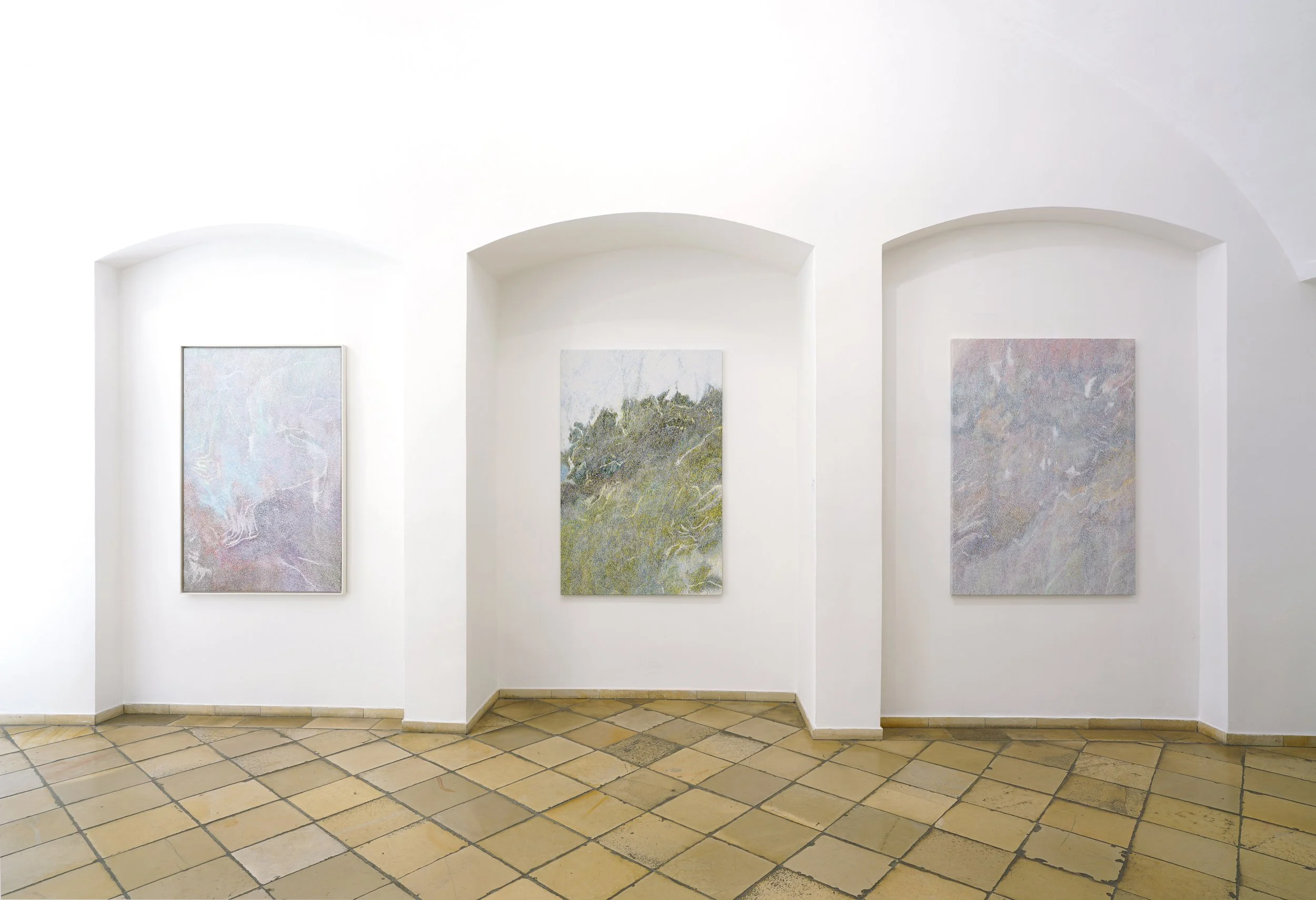
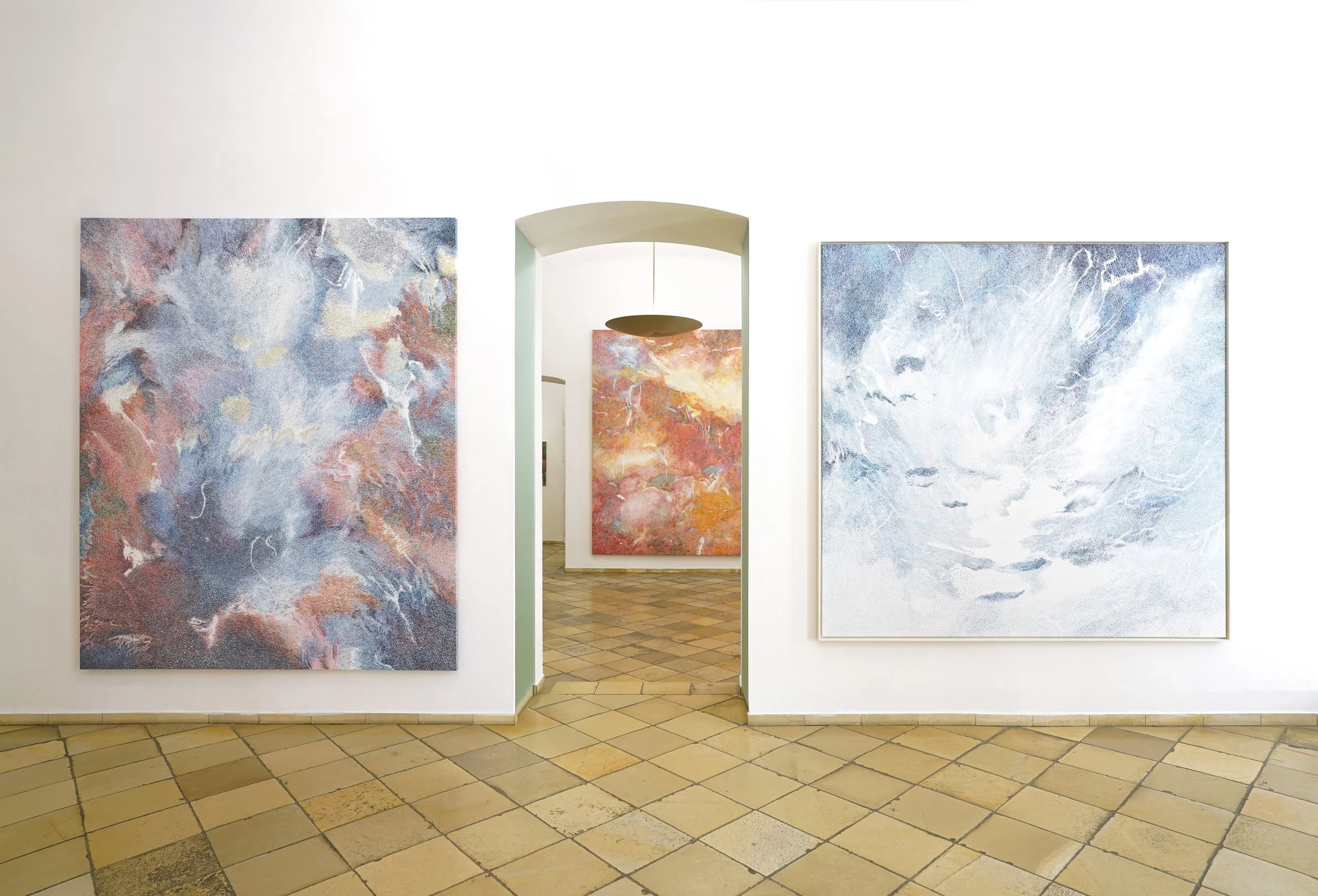
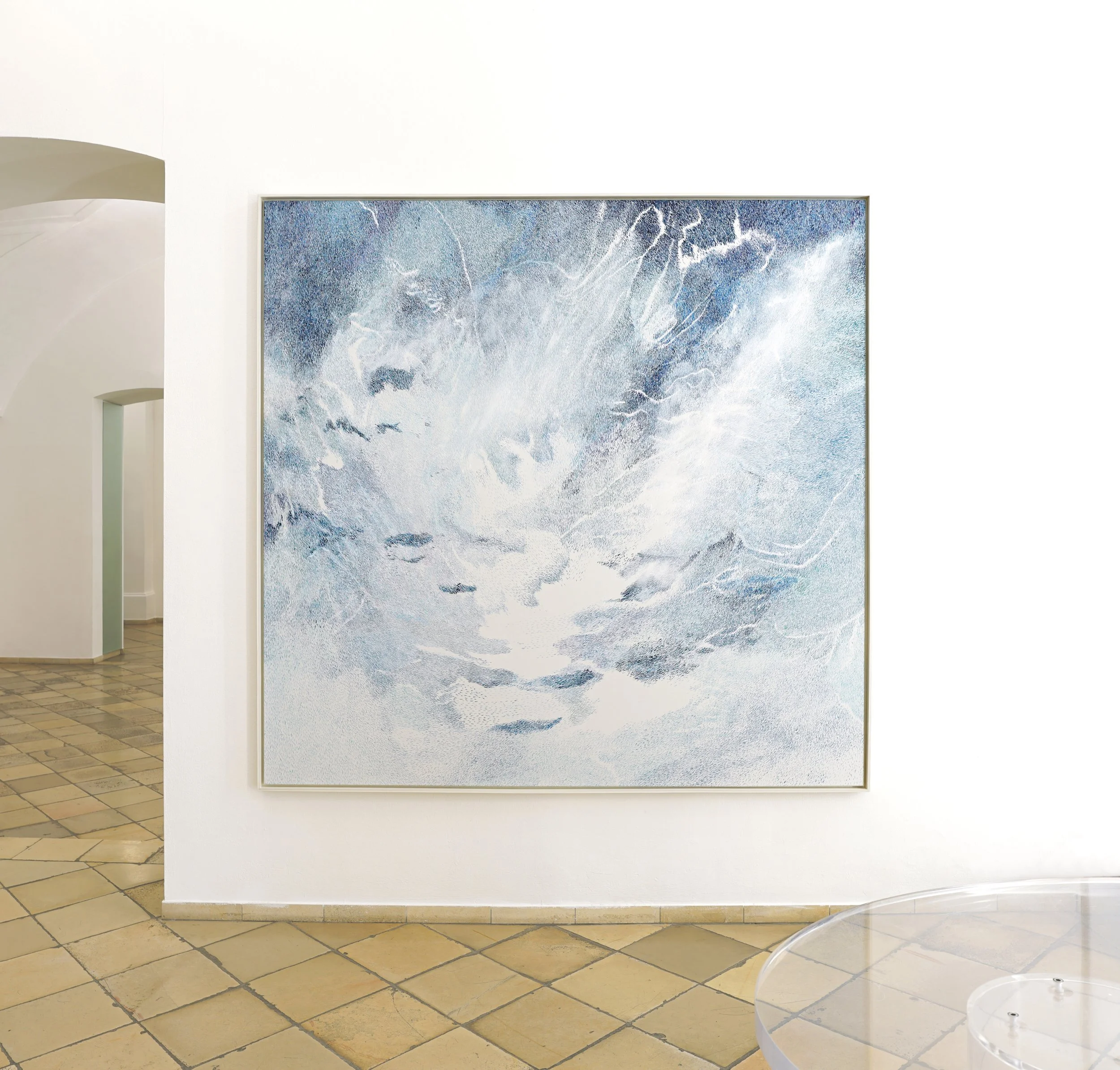
The Hourglass, 2026 ink on canvas, 200 x 195 x 1,5 cm, framed
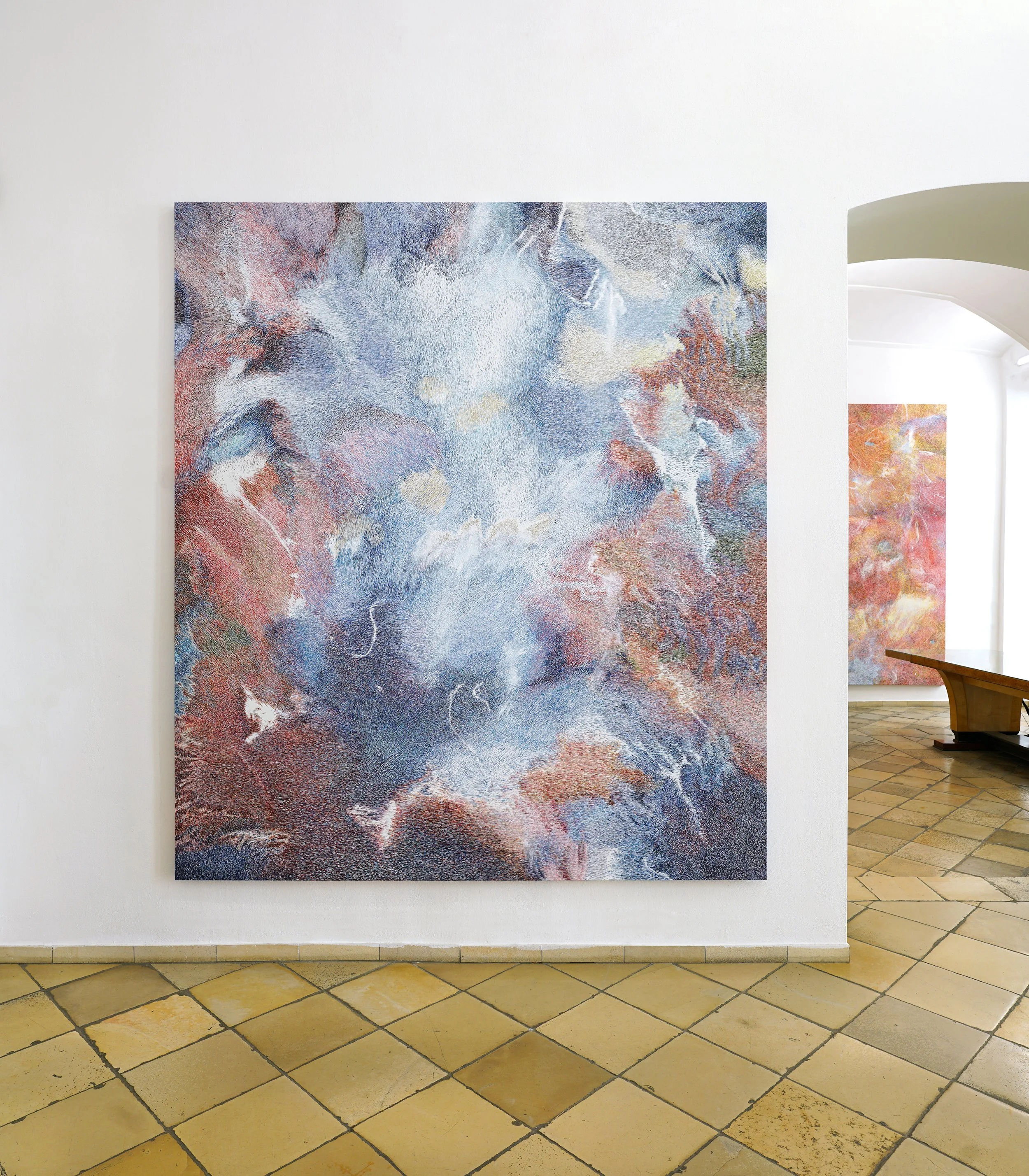
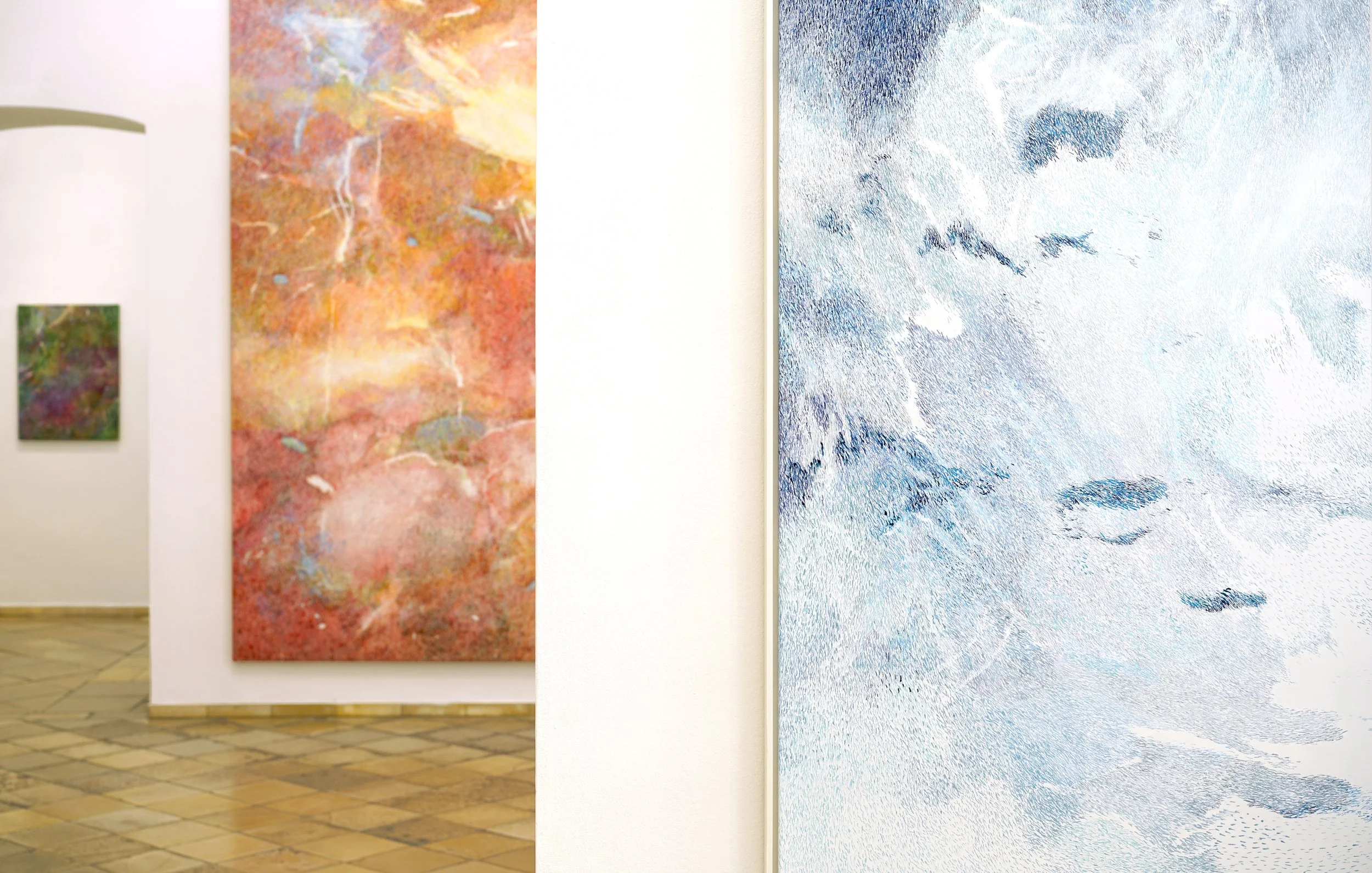
When A Jewelled Heaven Leaps A Sudden Blue, 2026, ink on canvas, 230 x 200 x 2,8 cm
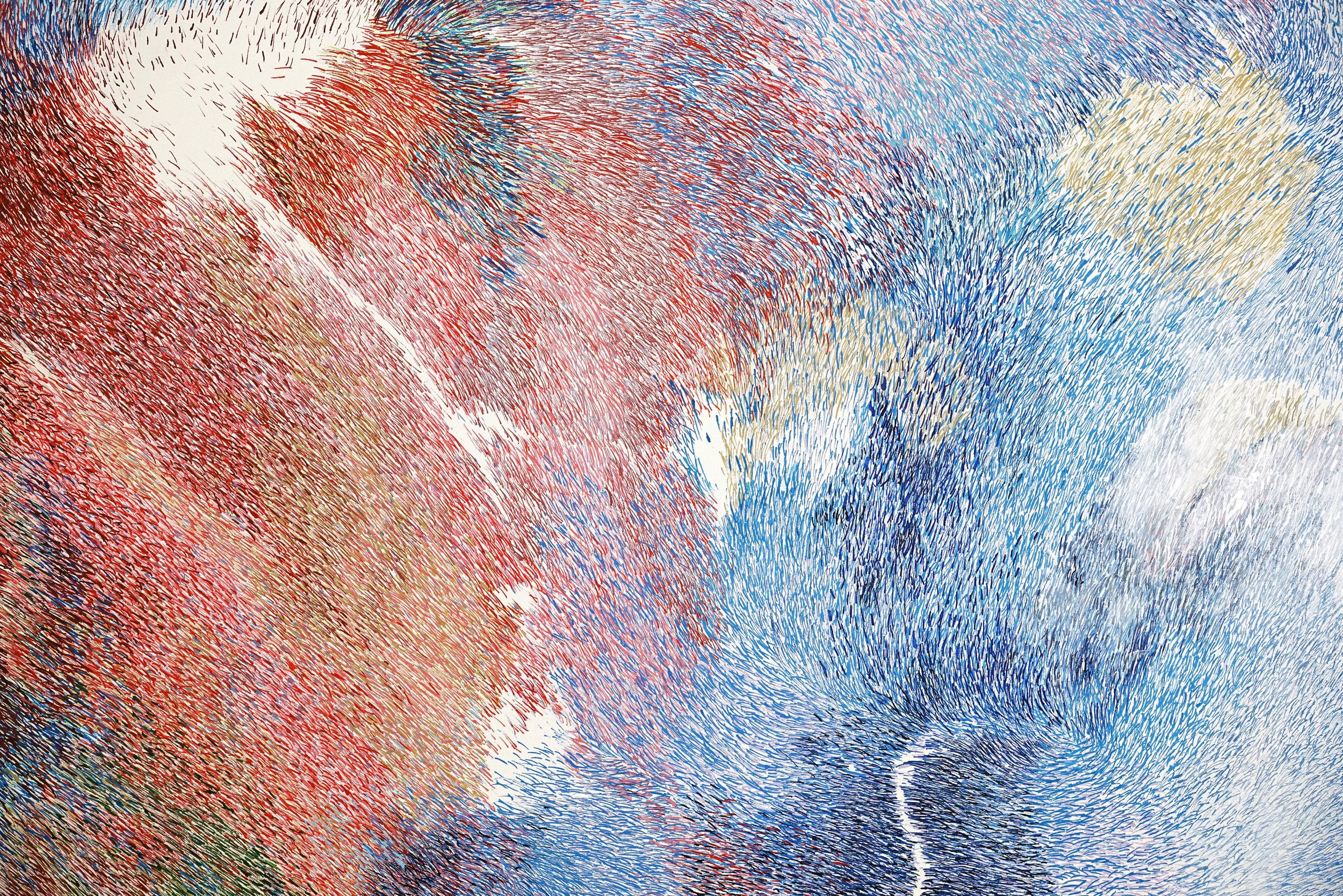
Detail: When A Jewelled Heaven Leaps A Sudden Blue
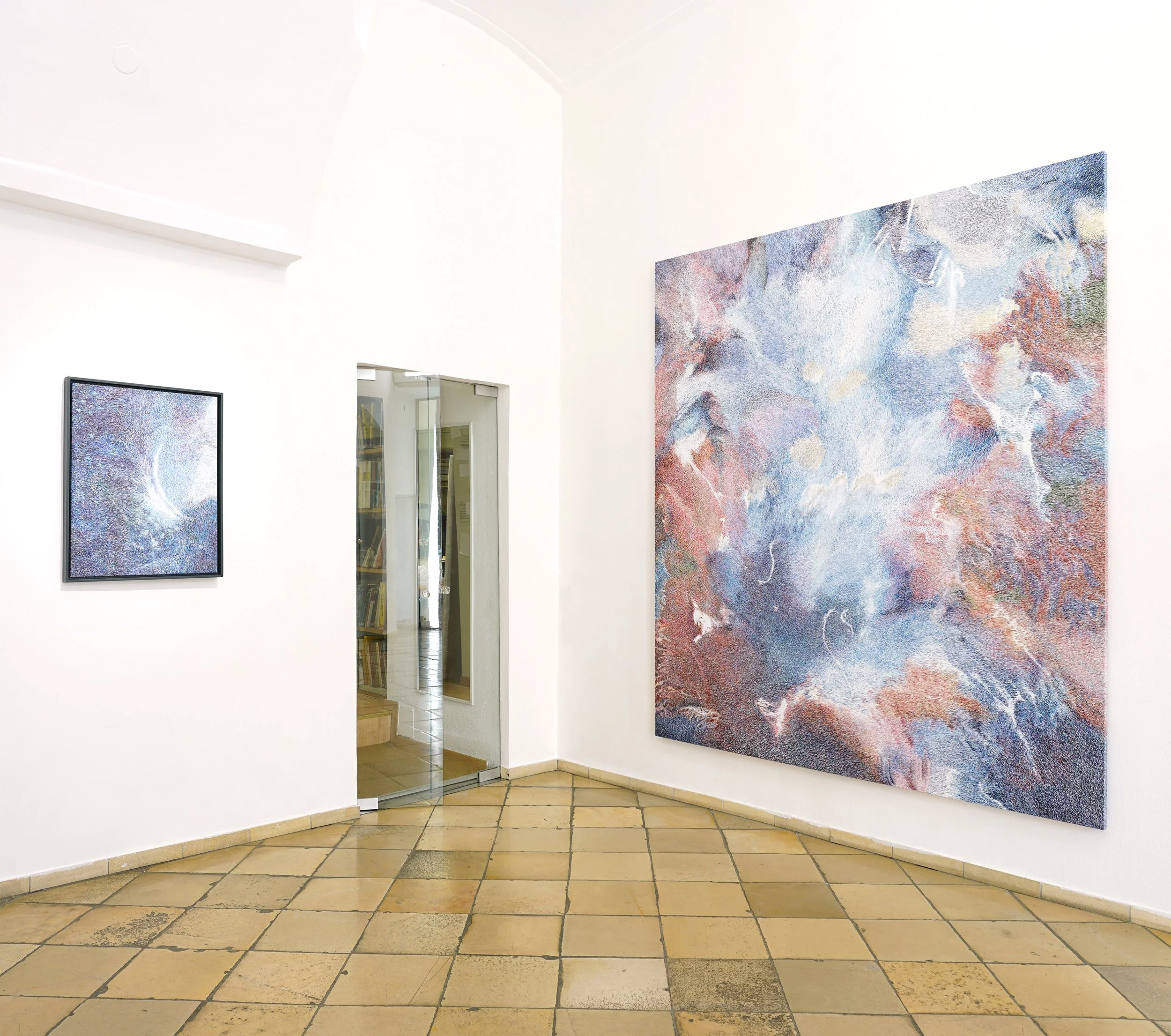
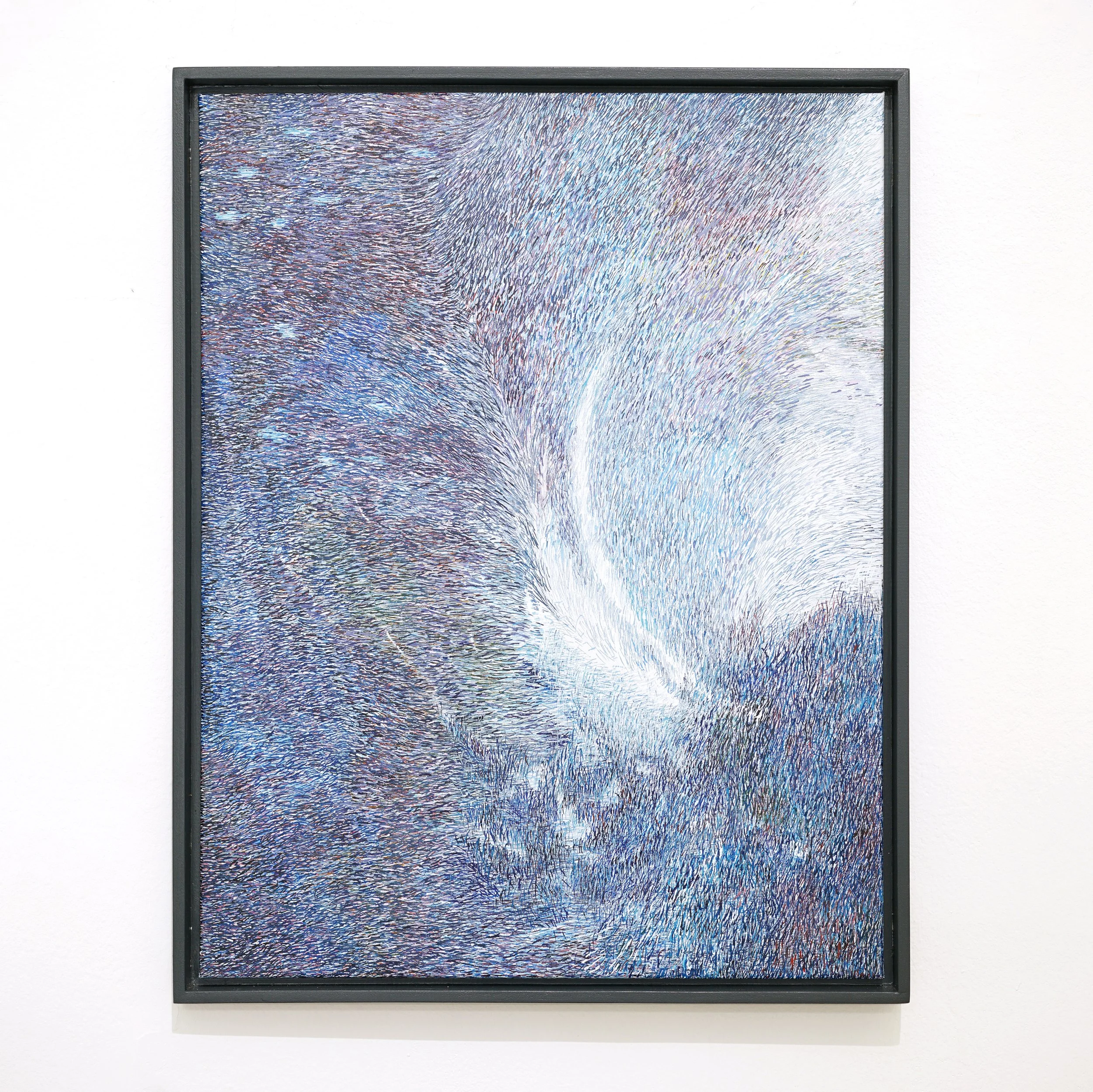
An Answer I Wish I Had, 2026, ink on canvas, 70 x 55 x 1,5 cm, framed
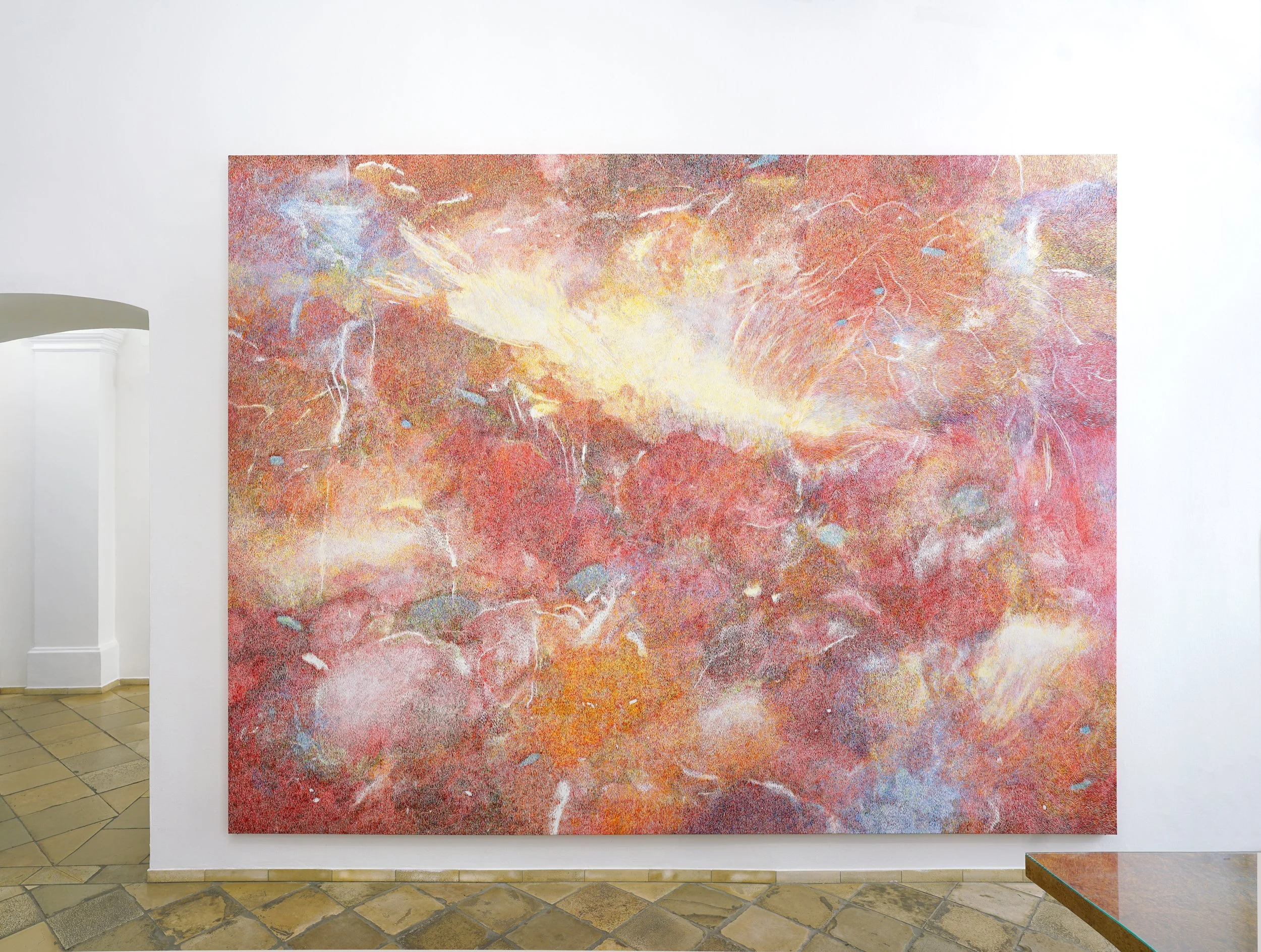
It ́s All Ahead Of You, 2023, ink on canvas, 300 x 396 x 4 cm
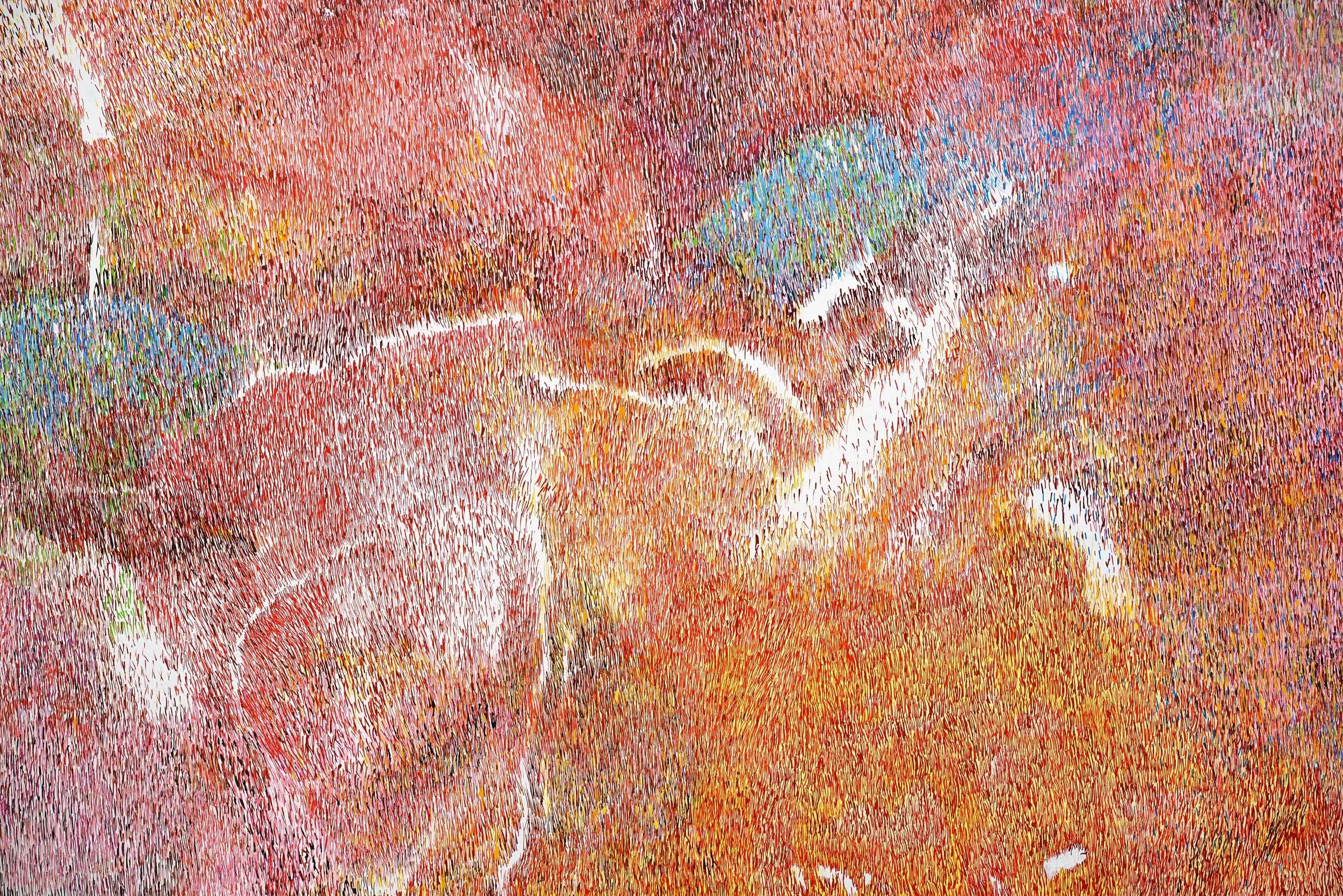
Detail: It ́s All Ahead Of You
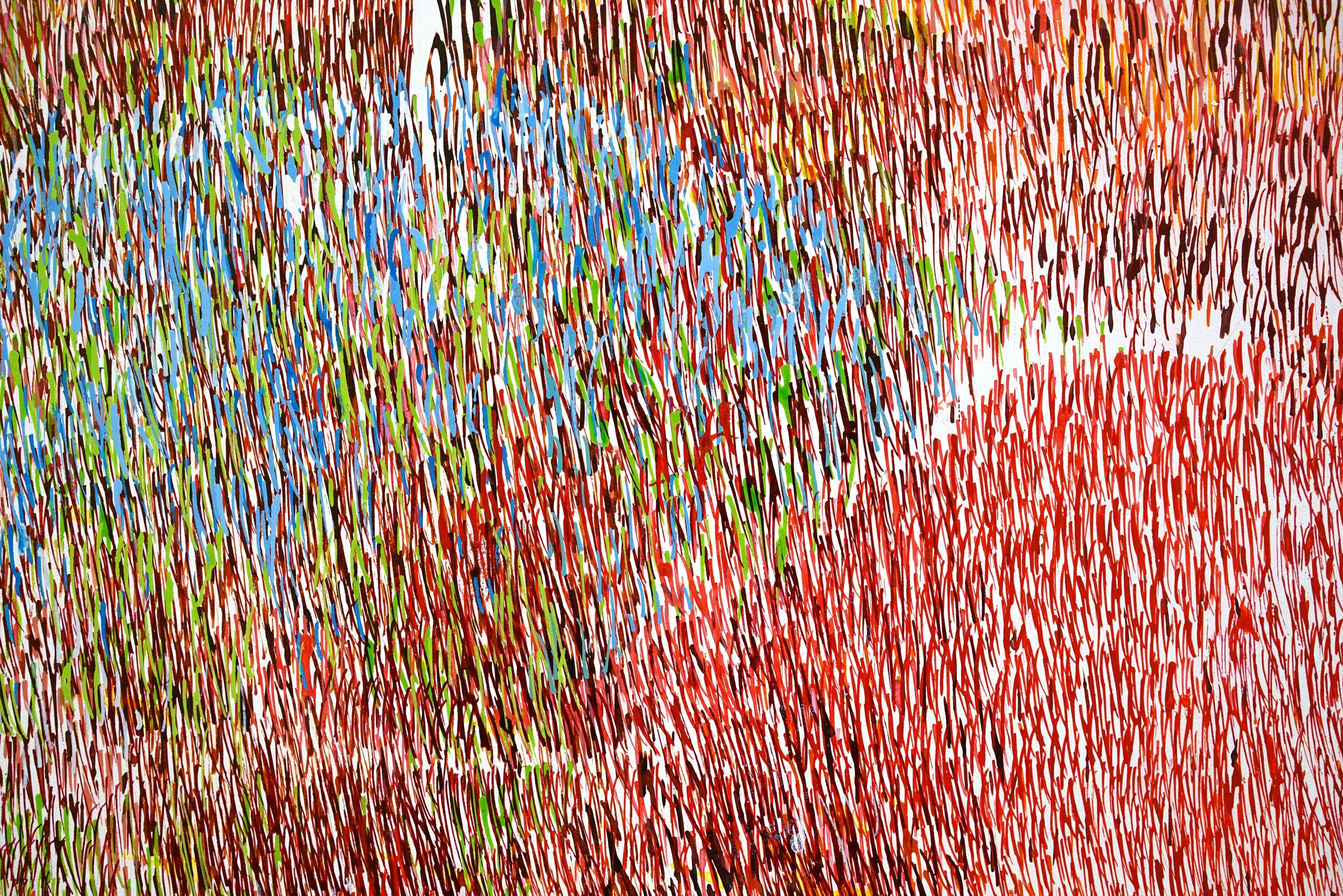
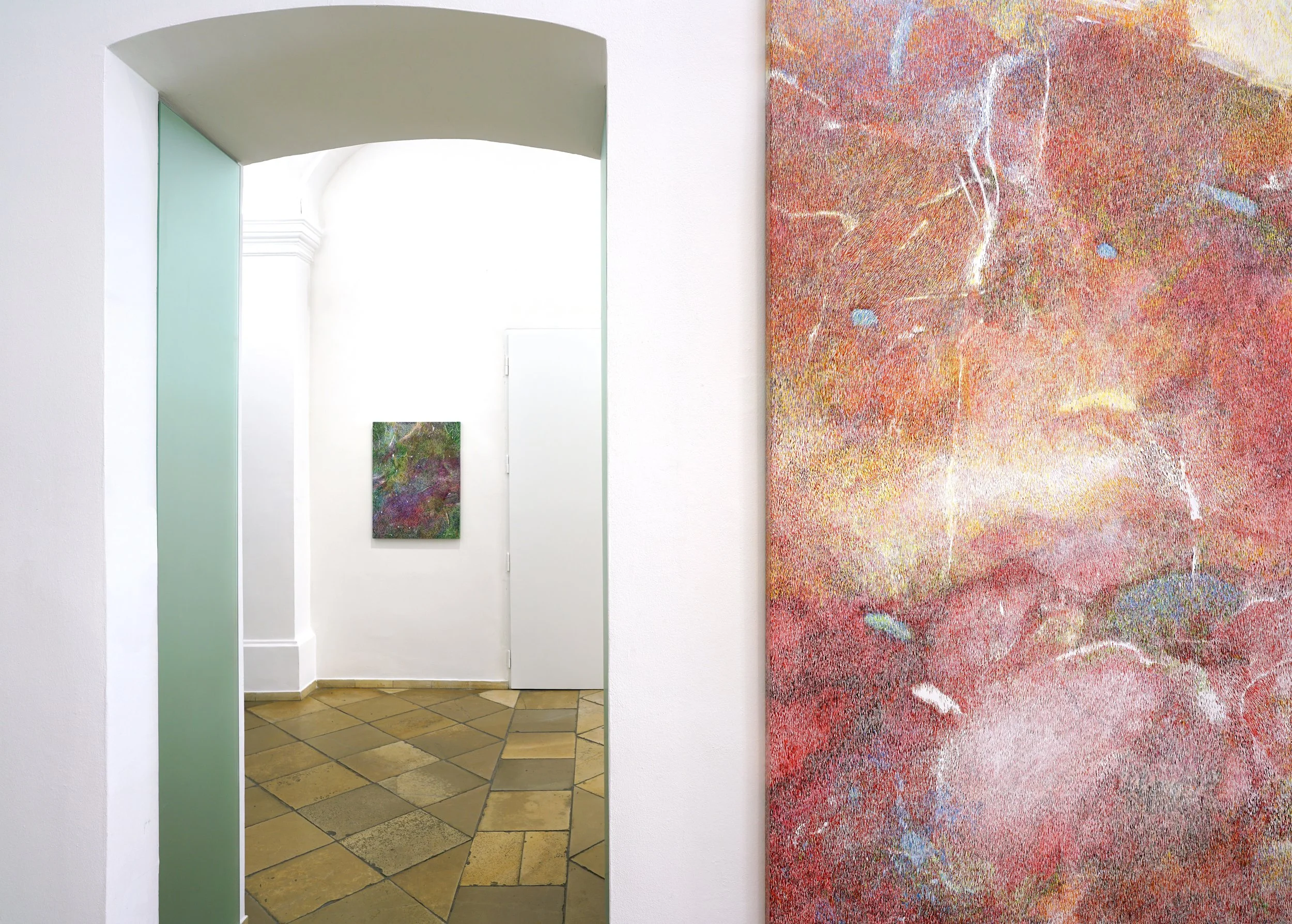
left: Star Fitness, 2024, ink on canvas, 80 x 60 cm
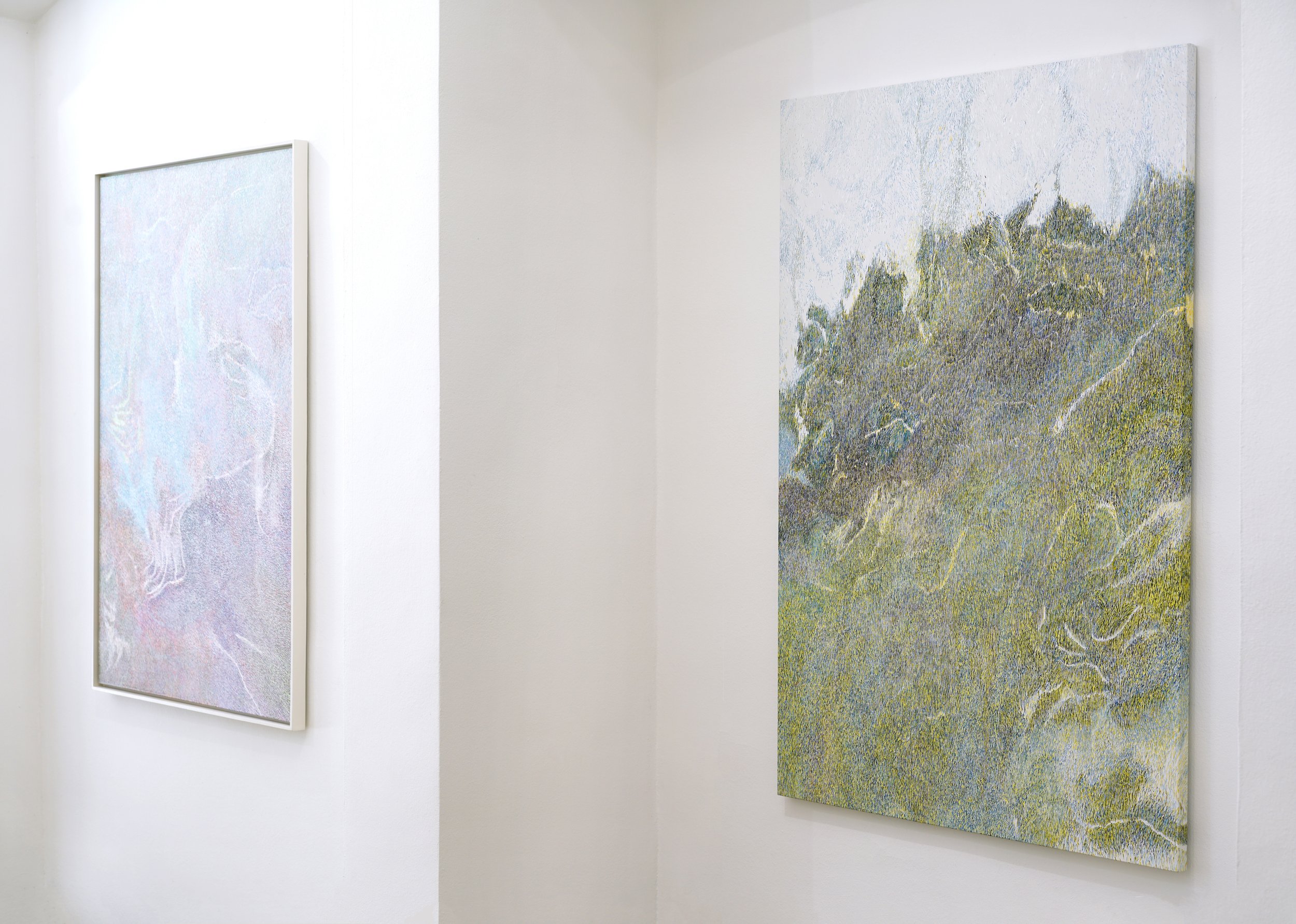
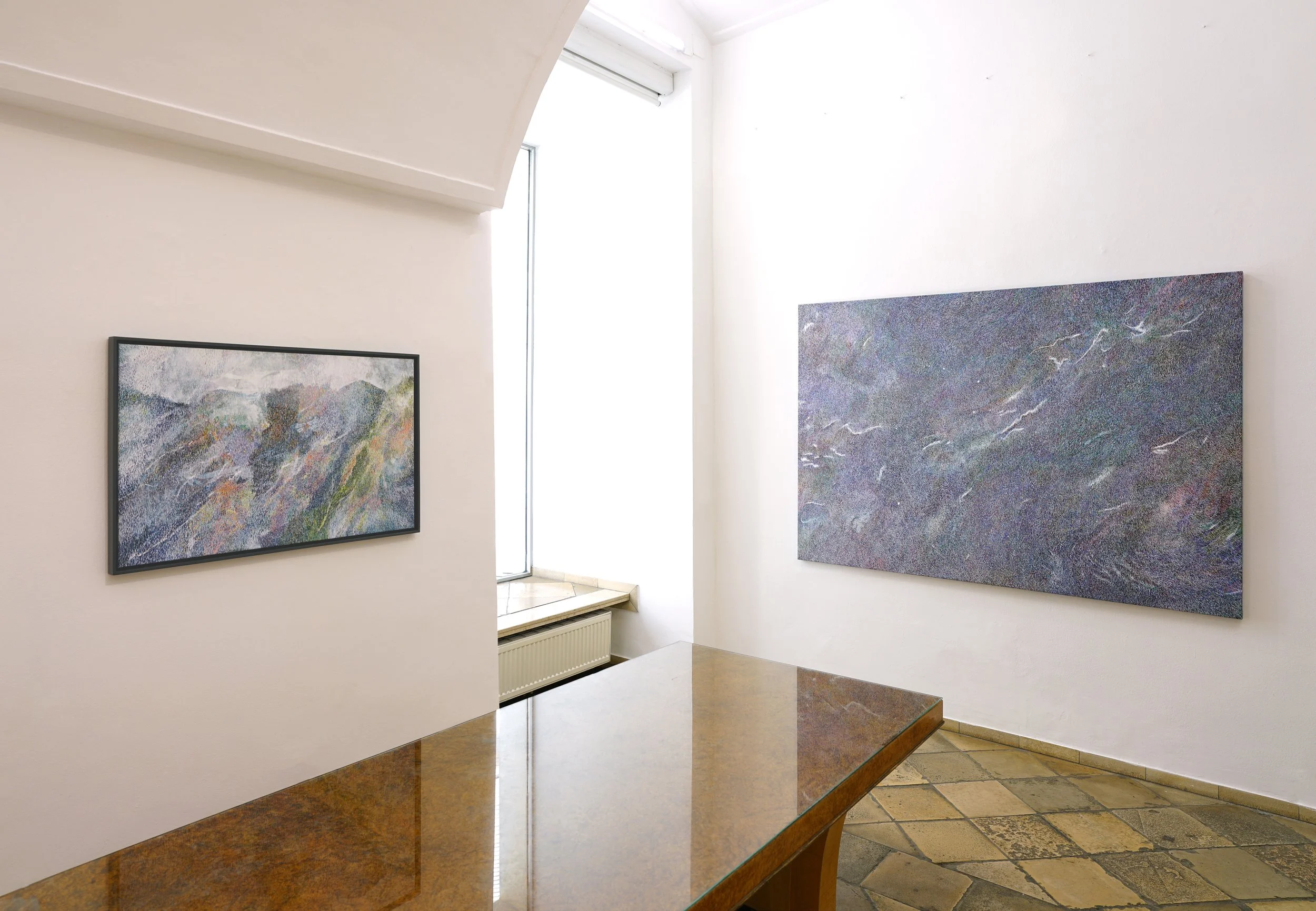
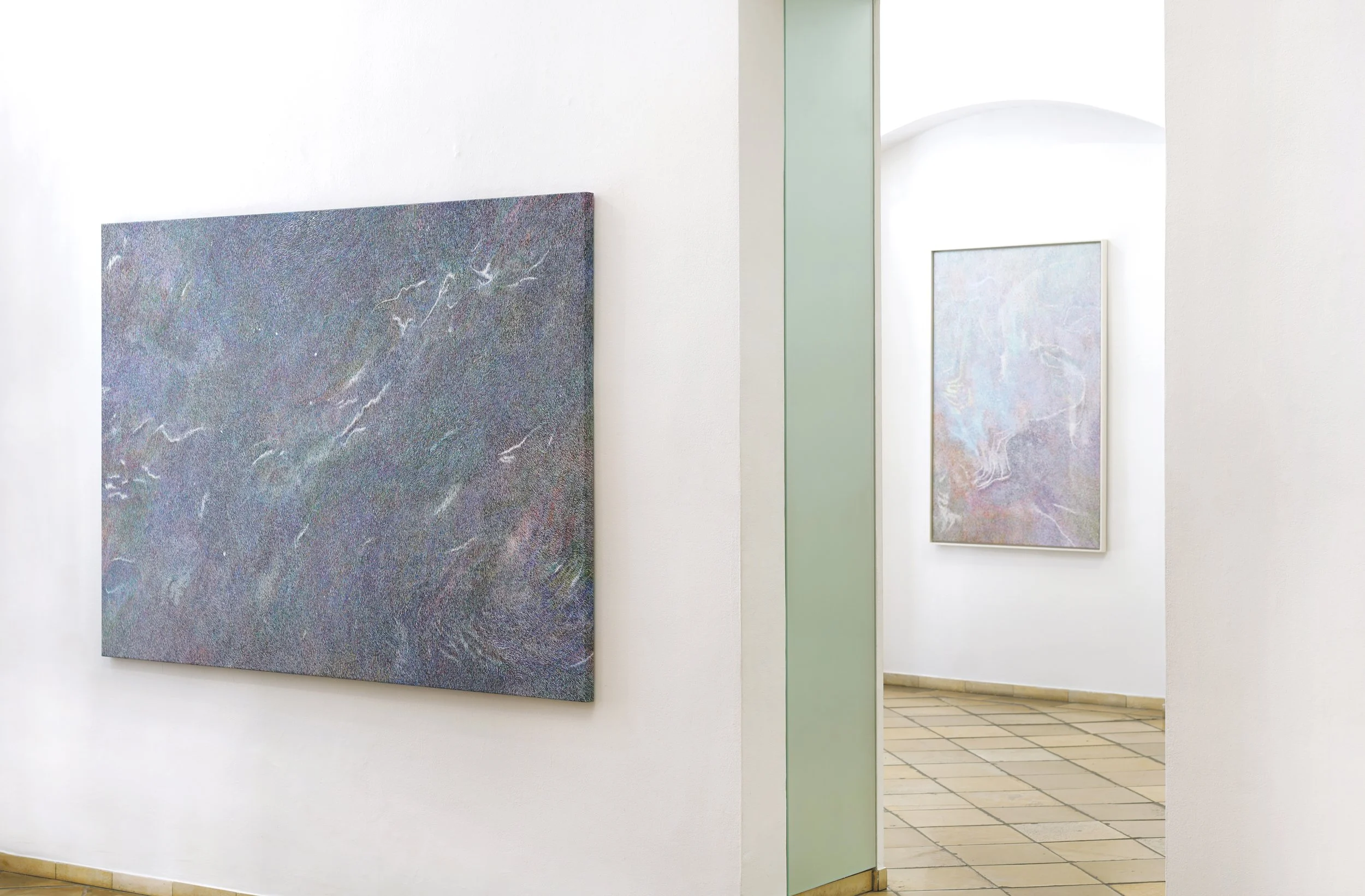
left: (Your) Secret Live, 2026, ink on canvas, 140 x 95 cm, framed / right: The Garden of Indolence, 2025, ink on canvas, 150 x 100 cm
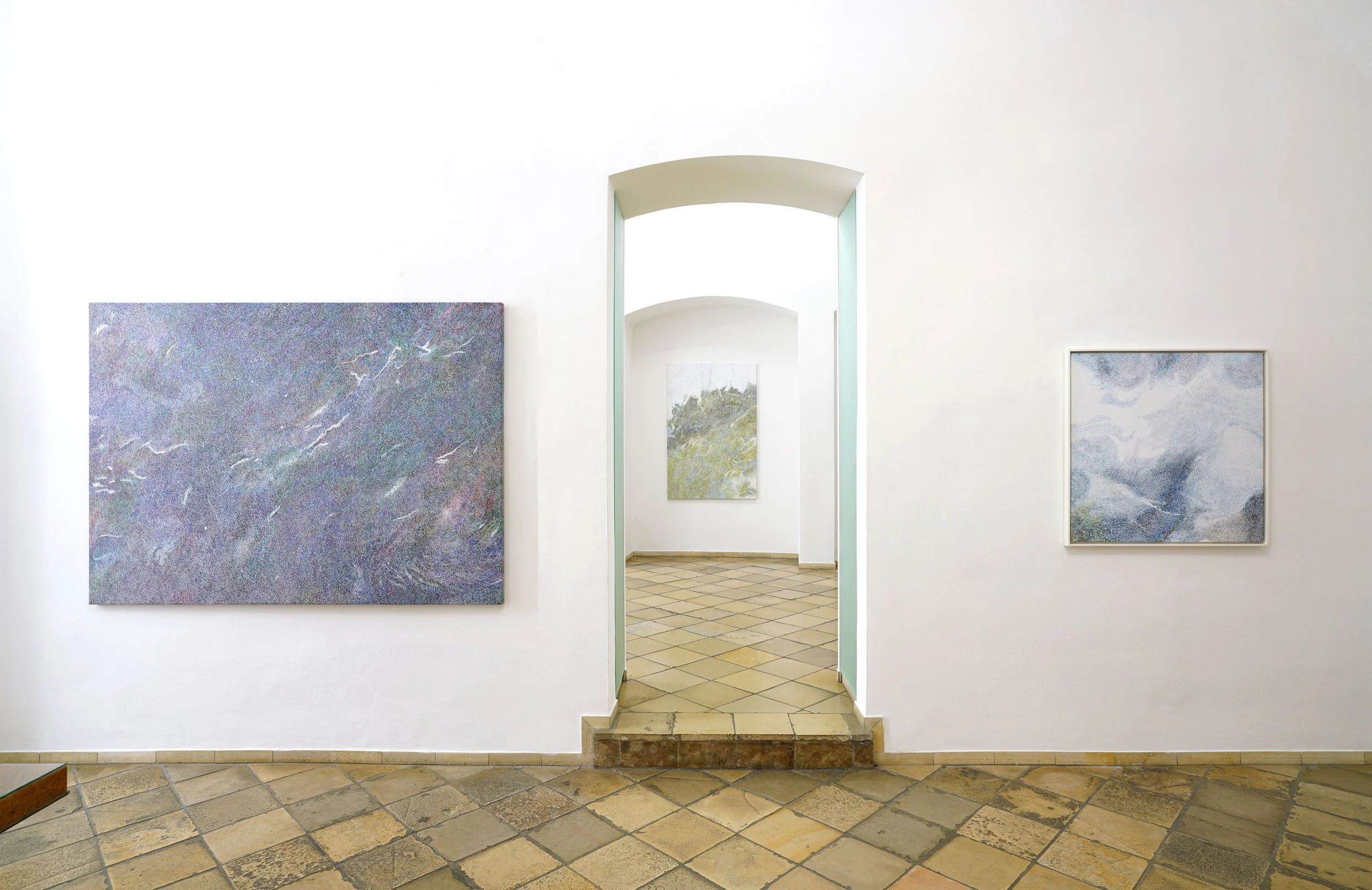
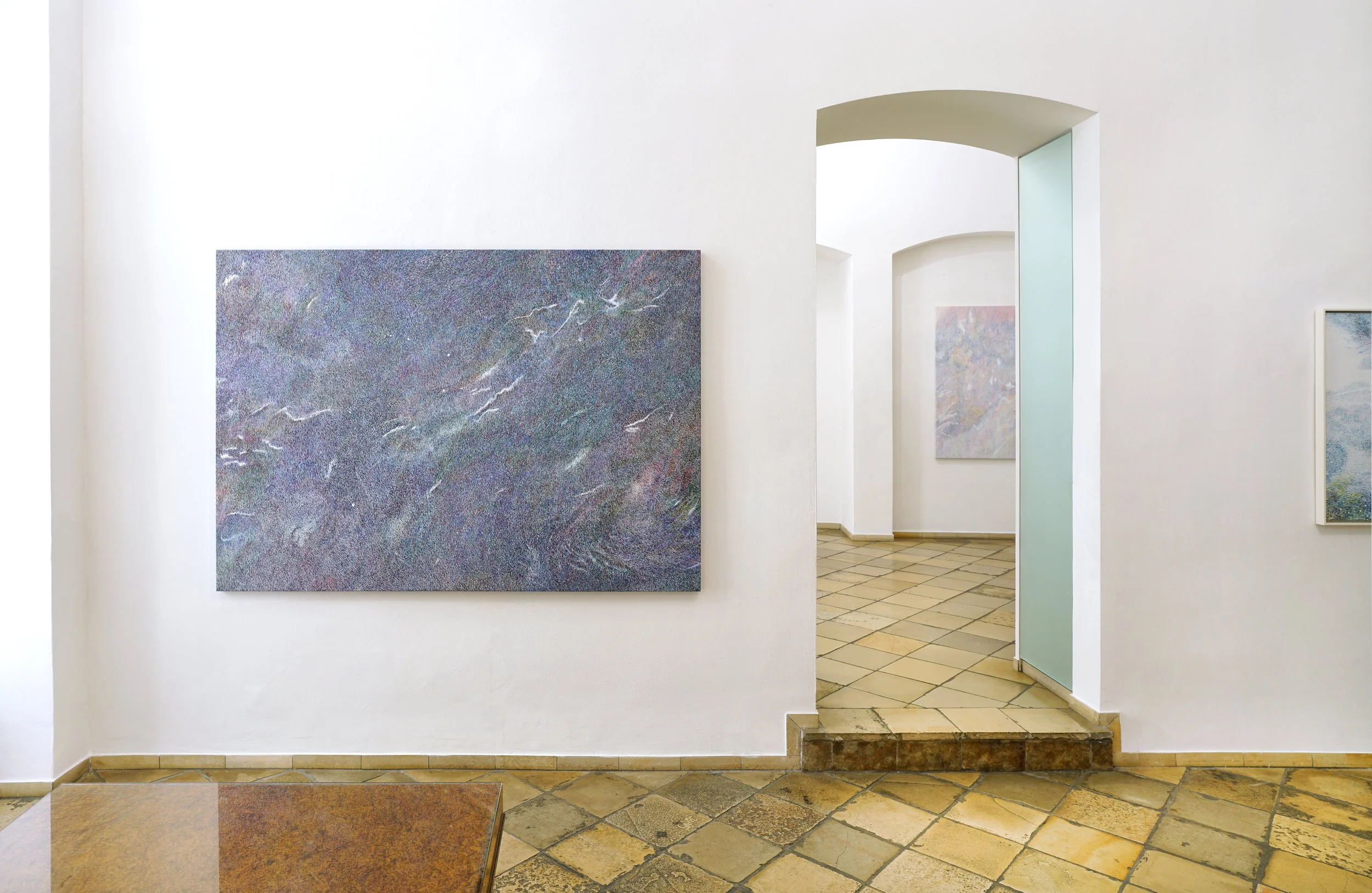
Winged Voyager, 2026, ink on canvas, 140 x 200 x 3,5 cm
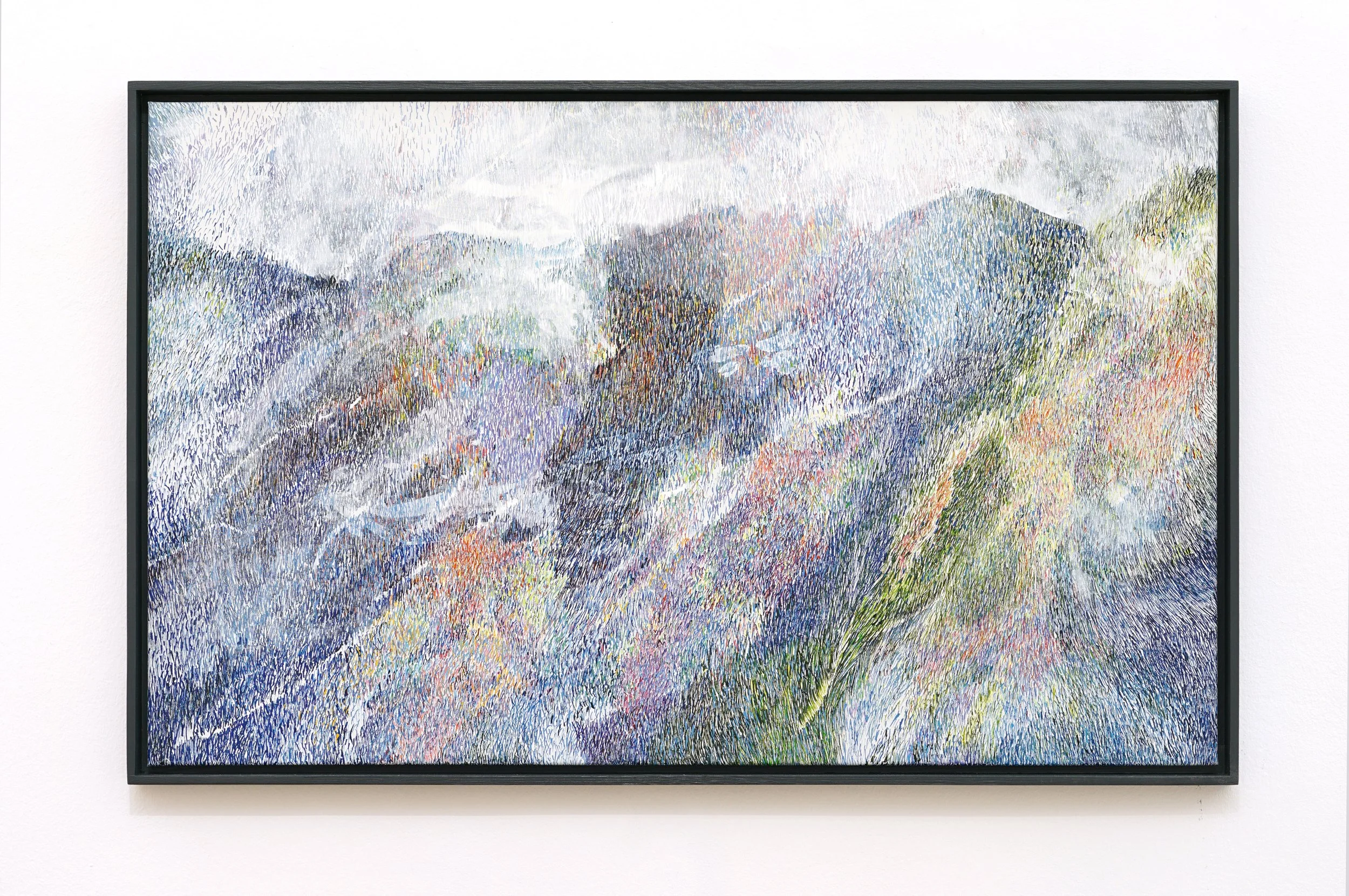
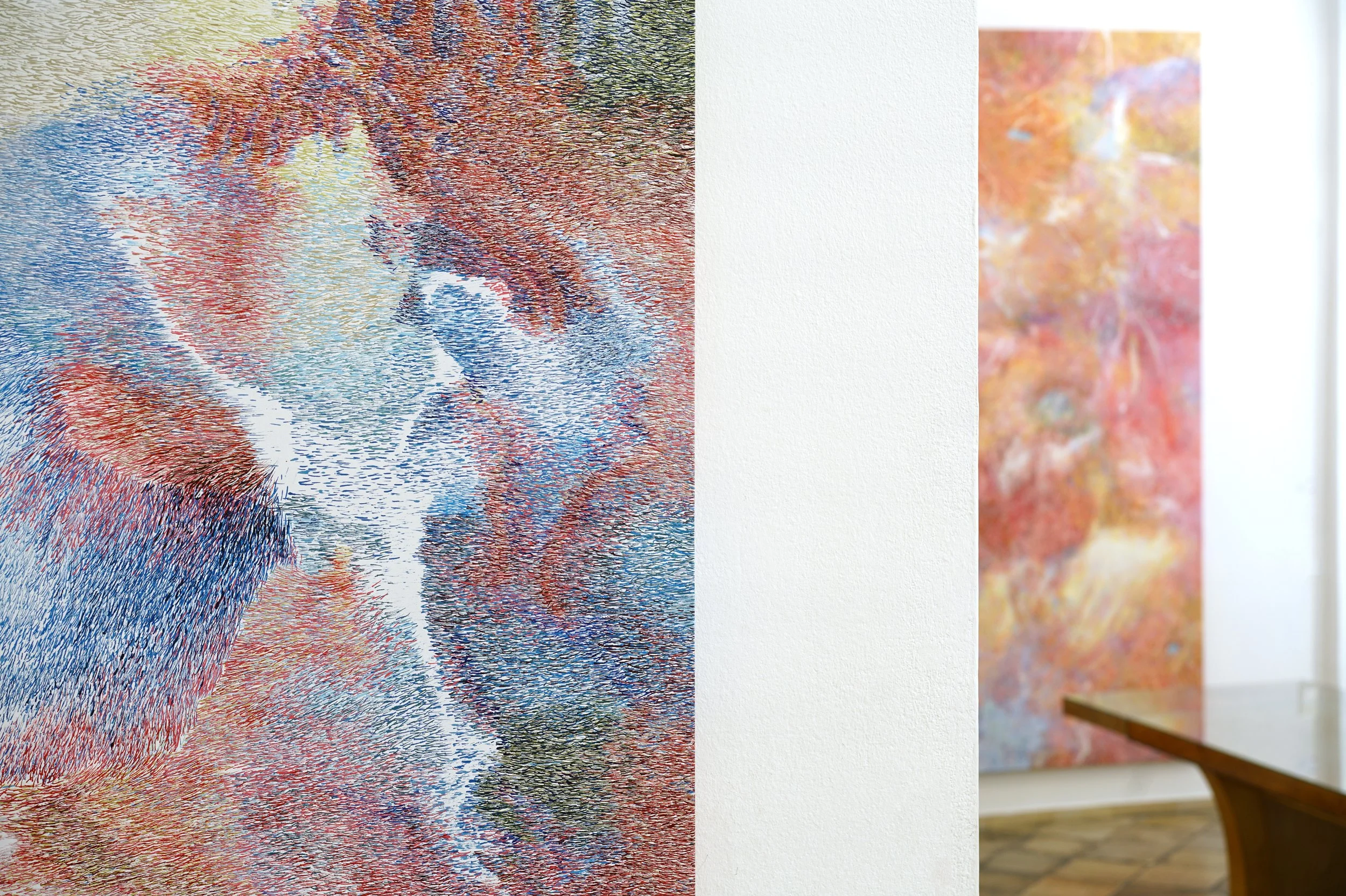
Mousetrap Replica, 2026, ink on canvas, 65 x 100 x 1,5 cm, framed
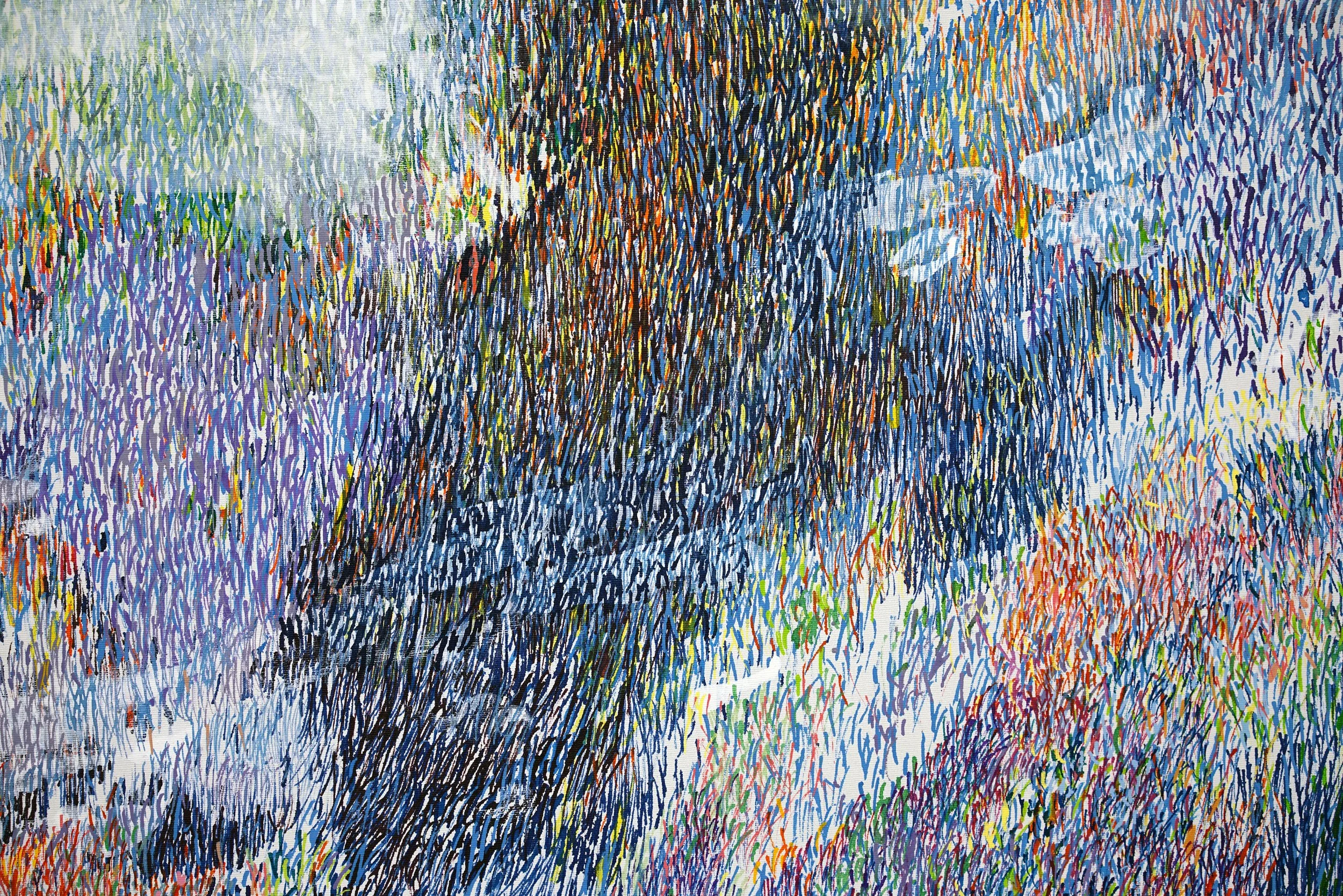
Detail: Mousetrap Replica
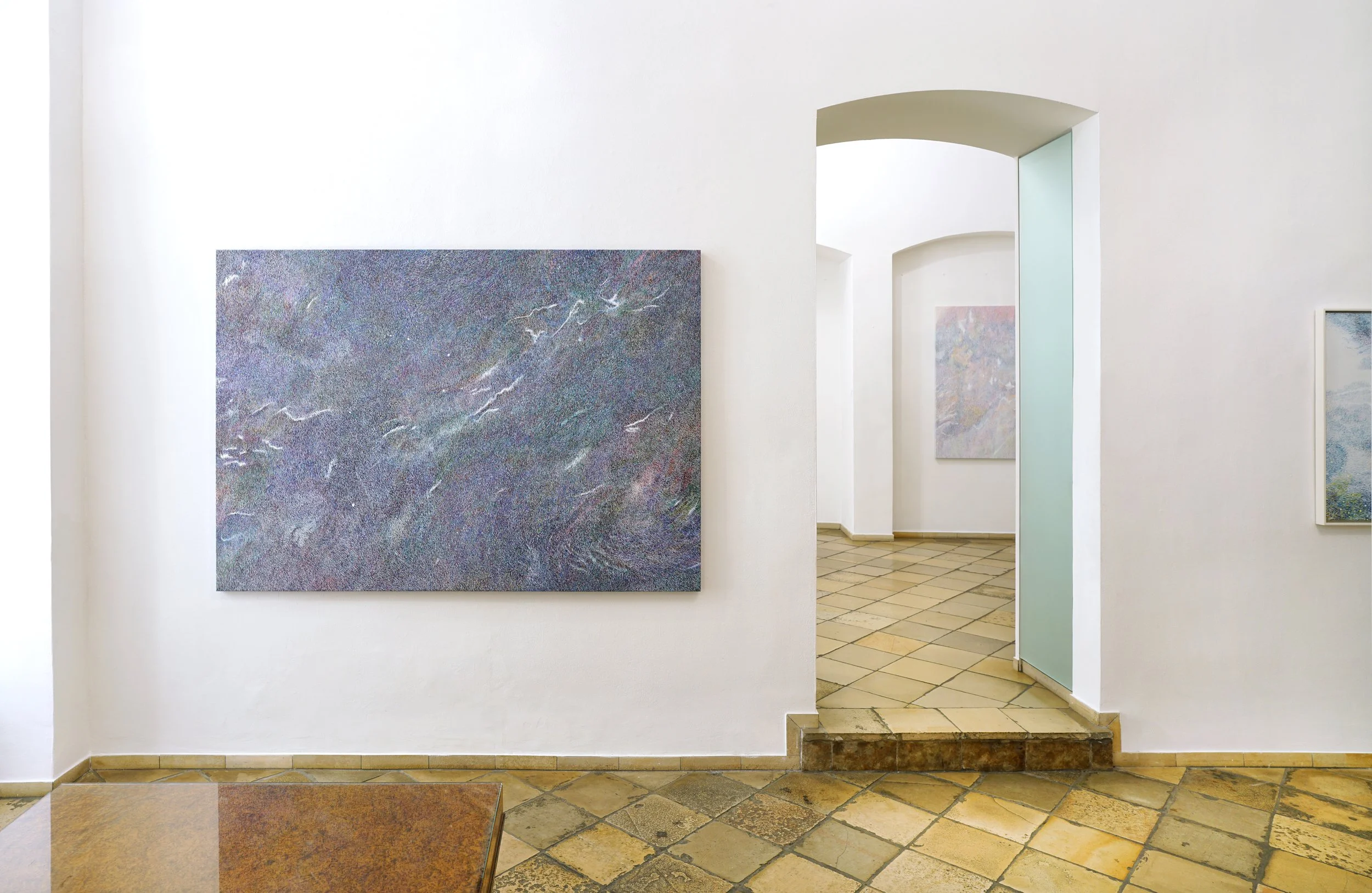
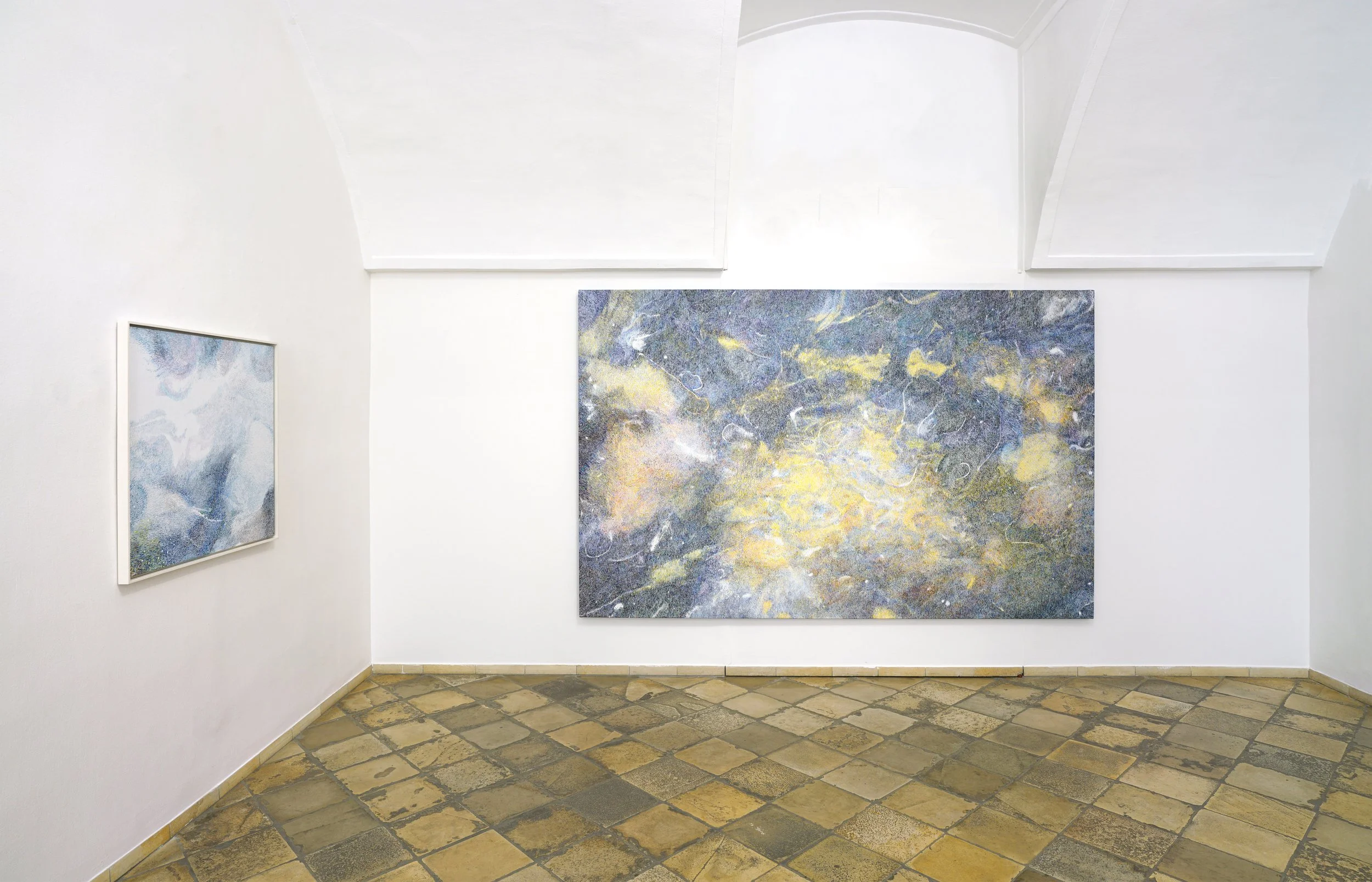
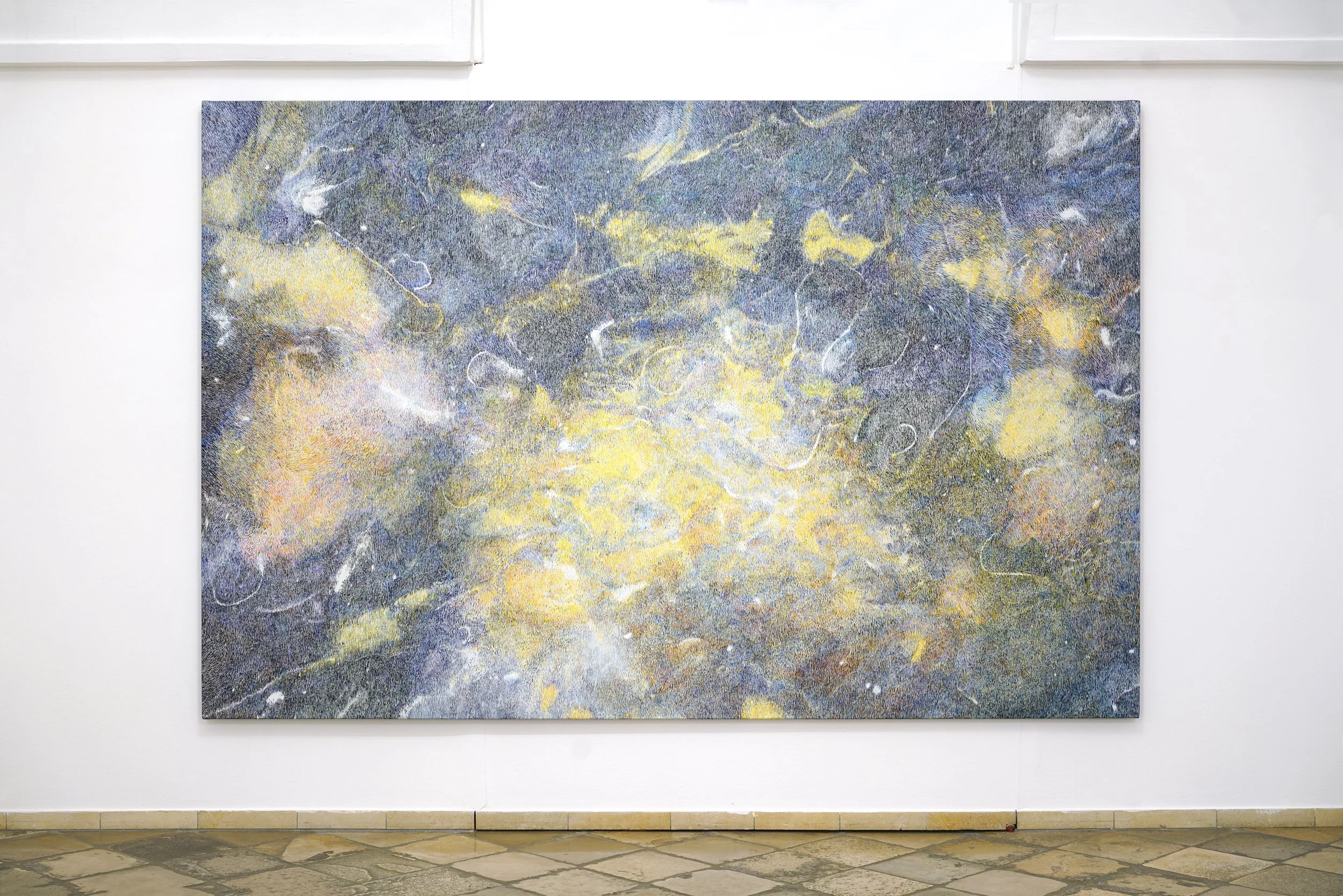
The In Way Out, 2022 , ink on canvas, 192 x 295 cm
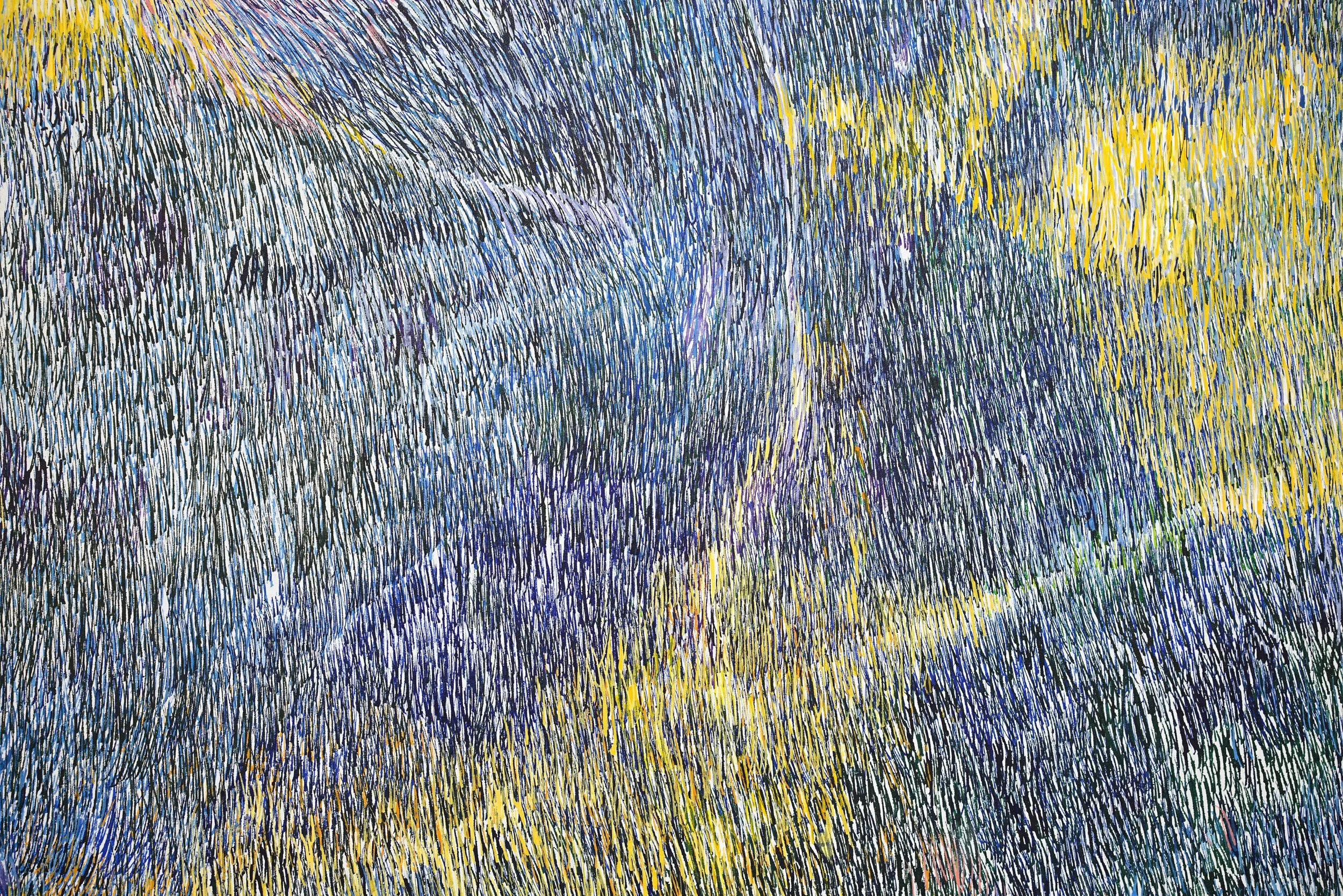
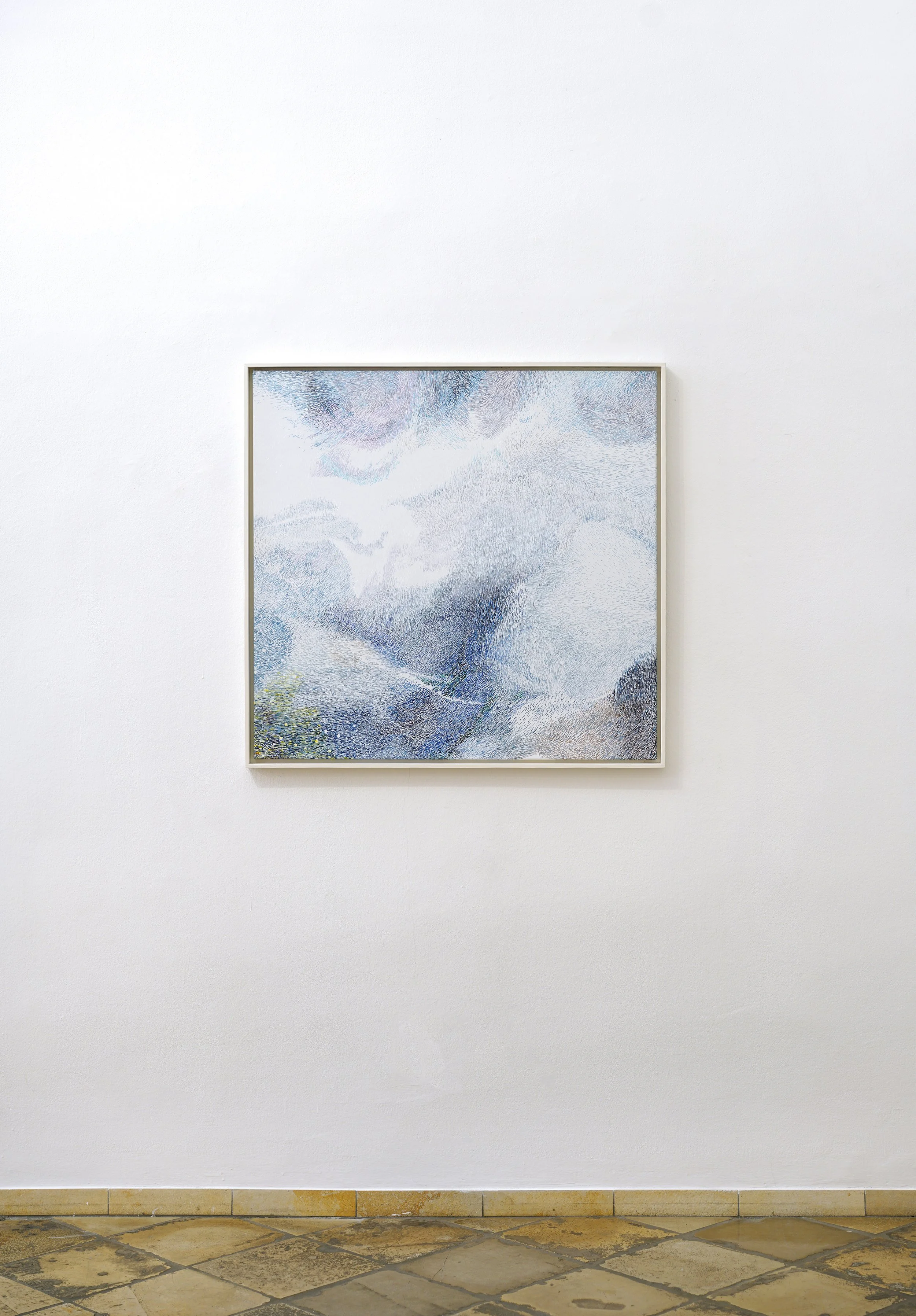
Preparations For A Journey, 2026, ink on canvas, 87 x 90 x 1,5 cm, framed
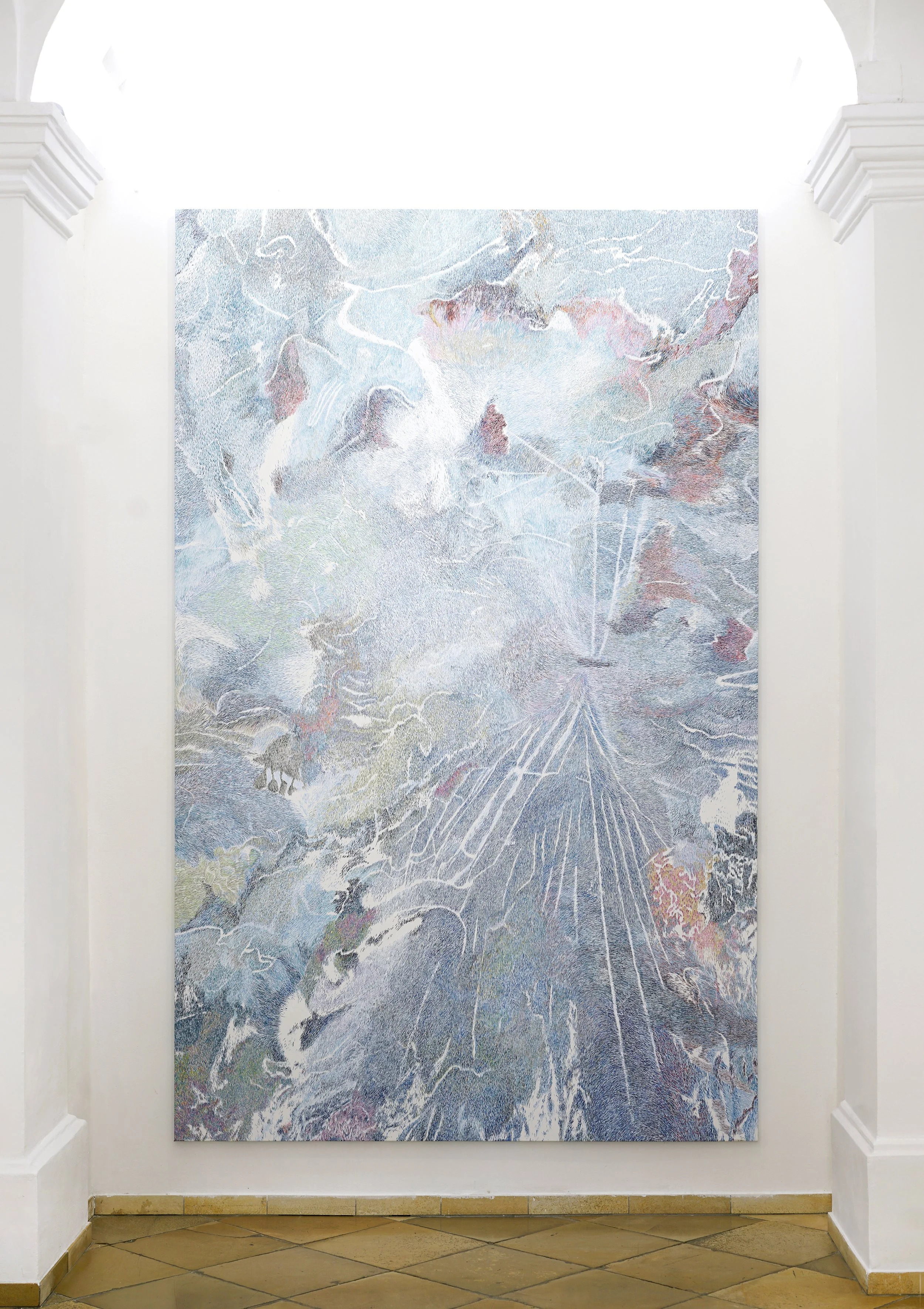
Lightning Showed a Yellow Beak, 2025, ink on canvas, 290 x 180 cm
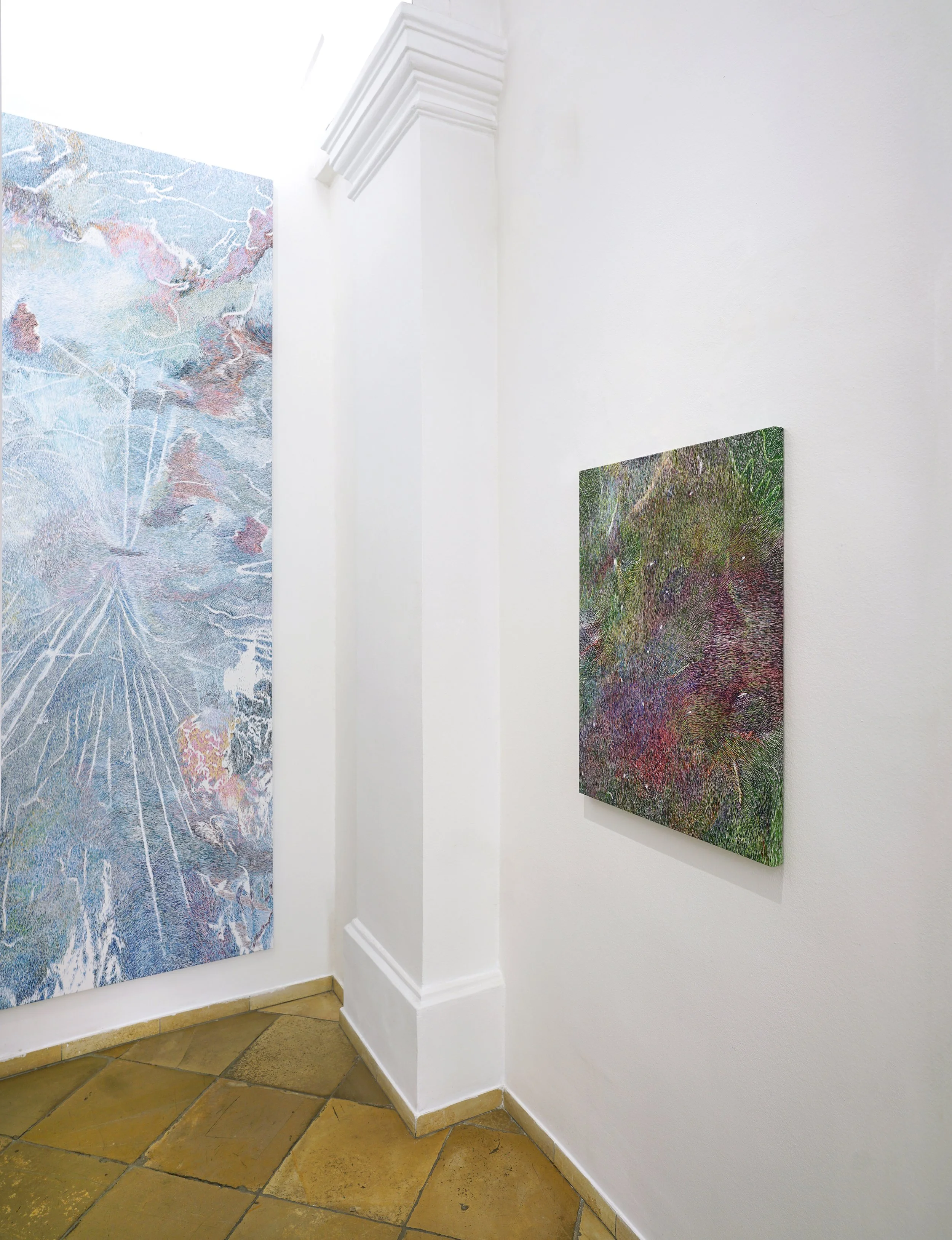
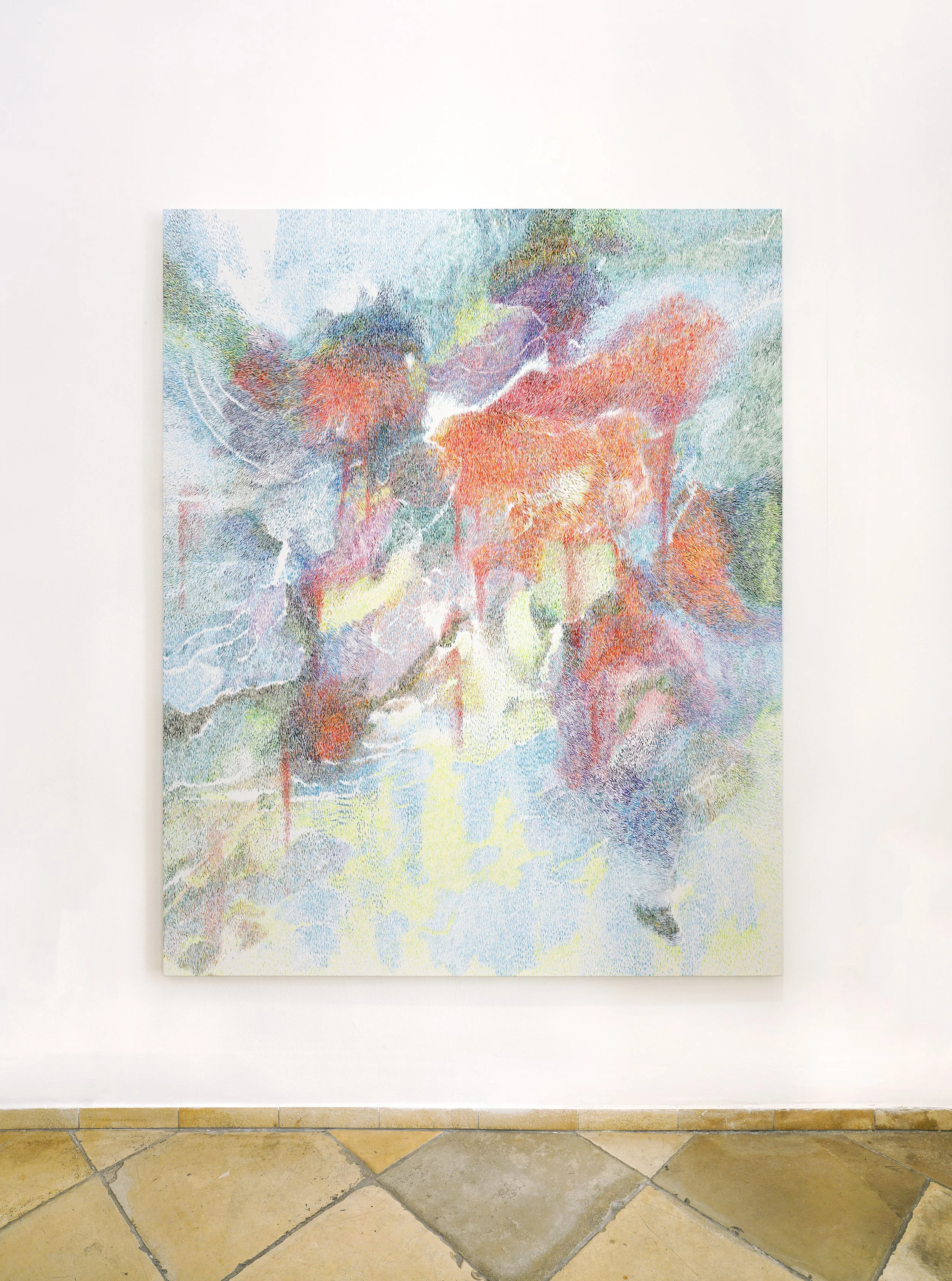
A Place Or Something To Rely On, 2026, ink on canvas, 200 x 160 cm
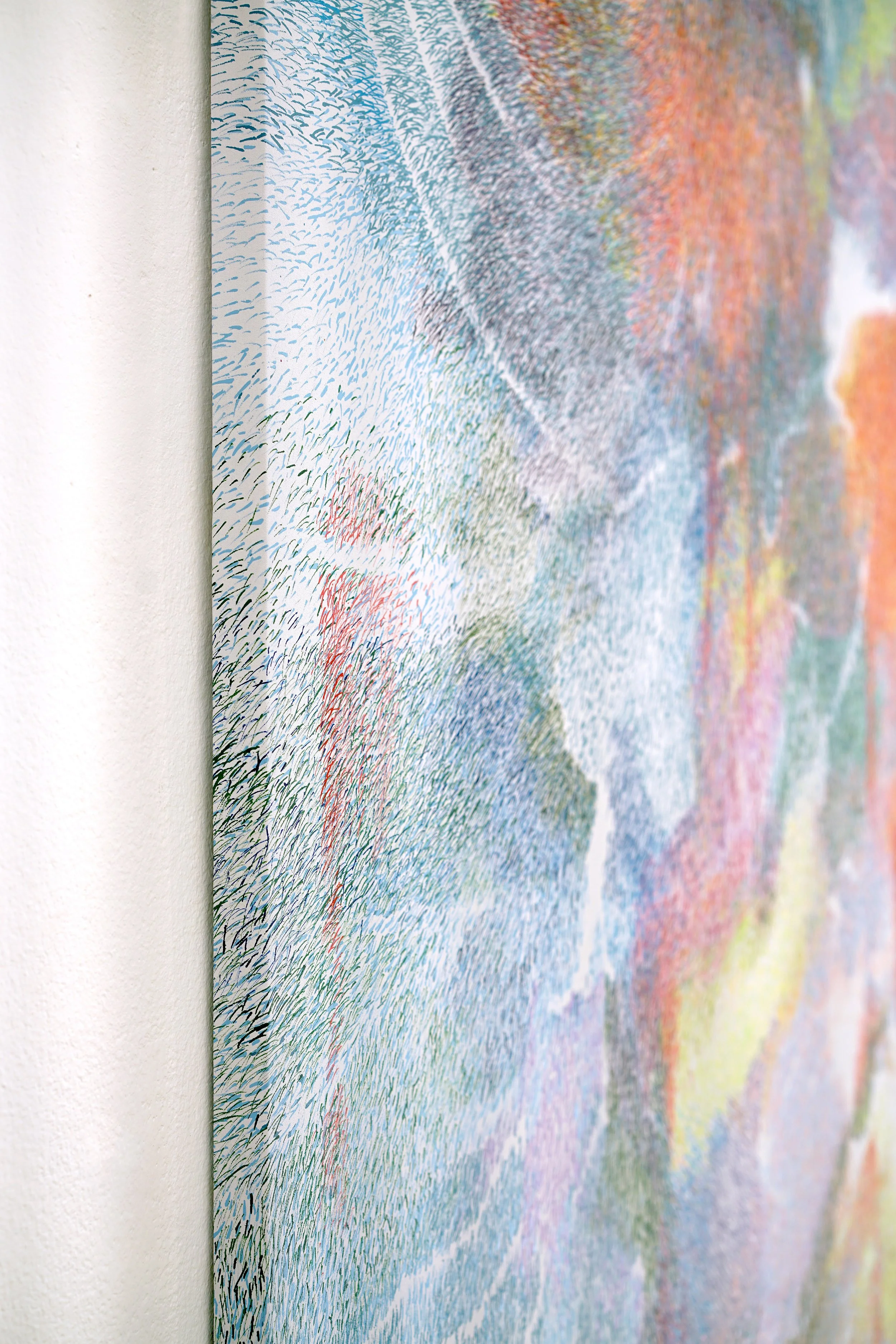
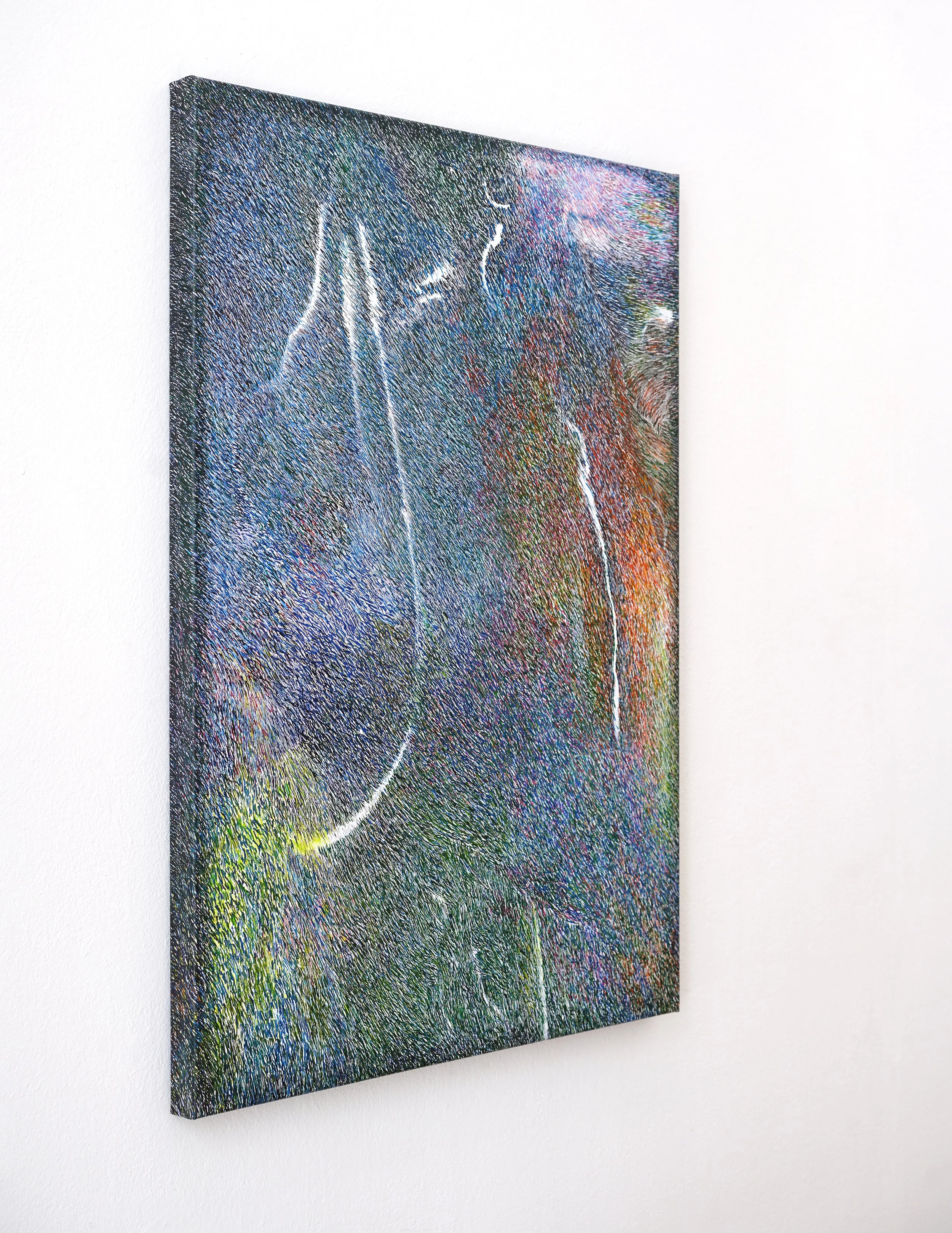
Nocturnal, 2026, ink on canvas, 88 x 65 x 3,5 cm
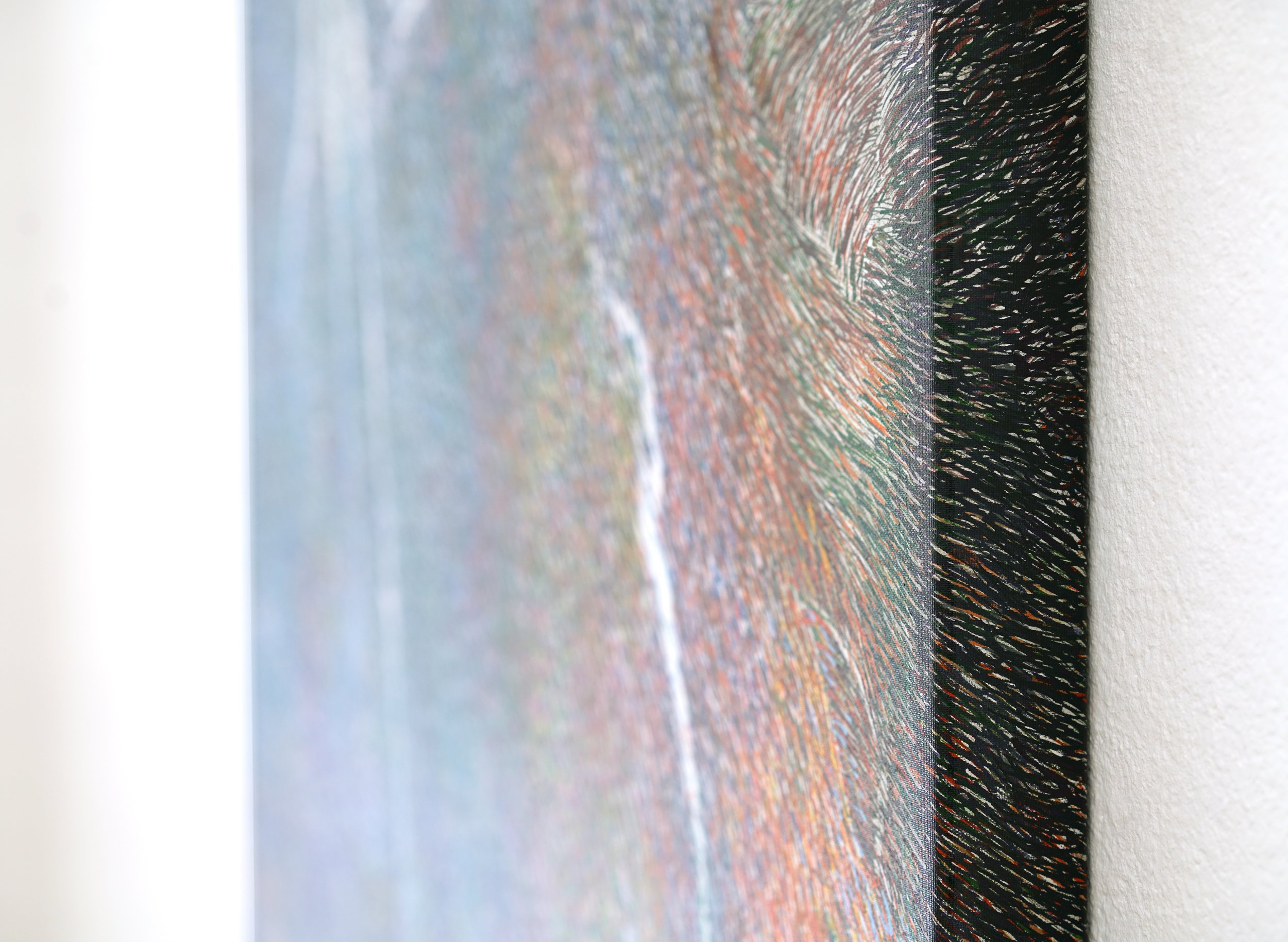
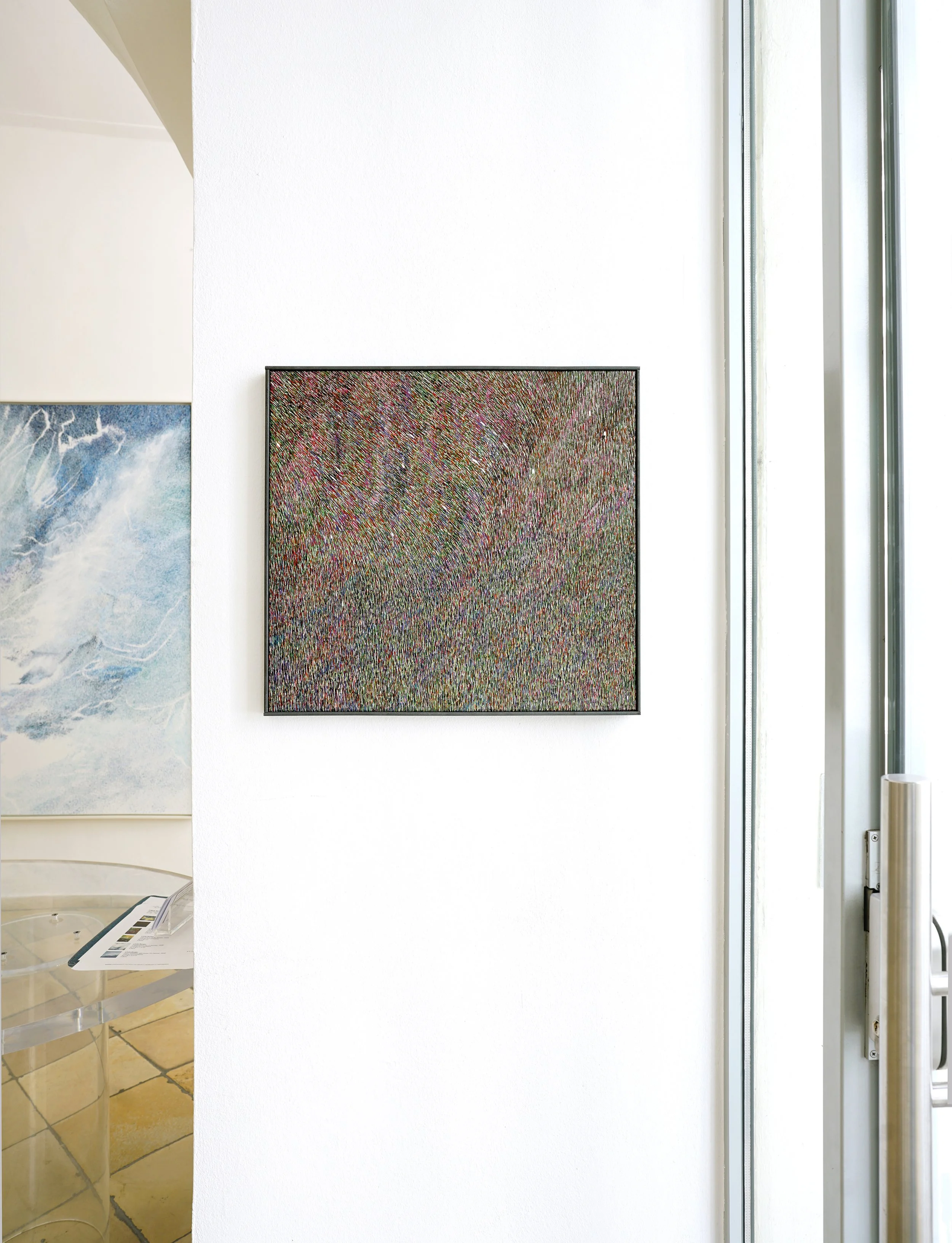
Hitherto, 2026, ink on canvas, 51 x 56 x 3,5 cm, iron strips
Hard Facts From the Fiction Department
Linda Berger
22 May – 03 July 2026
Galerie Suppan
Habsburgergasse 5, 1010 Vienna, Austria
LINDA BERGER
Hard Facts From the Fiction Department
22 May - 3 Jul 2026
Meine Technik besteht darin, unzählige Federstriche in einer sich wiederholenden, fast meditativen Weise aufzutragen, um eine lebendige, organische Oberfläche zu schaffen. Ich verwende kurze, oft vertikale Linien/Striche mit Tusche und Zeichenfeder. Es ist für mich die einfachste Art, ein starkes Zeichen zu schaffen.
Am Beginn des Zeichenprozesses finde ich eine Positionsbestimmung. Ich beginne und mache erste emotionale und physische Erfahrungen mit der Feder auf der Leinwand, ohne Konzept und Vorlage. Ich kann nicht gut erklären, wie das geht, es fühlt sich an, wie wenn ich immer noch herauszufinden versuche, wie man zeichnet!
Es entsteht wie ein Gespräch zwischen der Leinwand und mir. Und dann beginnt ein Prozess, in dem man akzeptieren muss, dass es naturgemäß viele Risiken gibt und es ist sehr wahrscheinlich, dass die Dinge nicht nach Plan verlaufen, und das ist ein wirklich guter und wichtiger Teil des Prozesses!
Man kann sich gar nicht vorstellen, wie sehr sich die Zeichnung im Laufe ihres Entstehungsprozesses verändert. Wenn man sich auf eine Art Reise mit seinem Werk begibt, kann man zu Beginn nicht wissen, wo man am Ende landen wird und man lernt nichts, wenn man schon zu Beginn versucht, das Ende zu erreichen. Ich muss also schon im Prozess scheitern. Die Zeichnung muss brodeln, sie muss kämpfen, ich kämpfe dagegen an, in mir entsteht ein Zerstörungswunsch und deshalb werden Schicht über Schicht aufeinander gezeichnet. Es ist ein ständiges Hin und Her. Der Umgang mit der Farbe ist ebenso wichtig, ich mische alle Farben selbst aus den gängigen Zeichentuschefarben und verwende sie selten in ihrer reinen Form. Stattdessen werden die Farbtöne geschichtet und gemischt, um eine dynamische, sich verändernde Palette zu schaffen. Die Farben jagen einander. Es ist wichtig, die Oberfläche ständig herauszufordern. Dabei entsteht ein monotones Kratzgeräusch, das nur durch das erneute Eintauchen der Feder in das Tuschefass unterbrochen wird. Diese Beschreibung hört sich rasant an, in Wirklichkeit dauert es ewig, bis ein Bild fertig ist. Meistens Monate, schonmal ein Jahr.
Ich versuche, unsere komplexe Realität verständlich zu machen. So wie sich ein Mathematiker mit Formeln, Gleichungen, Hypothesen verständlich macht, versuche ich durch meine Werke ein Ergebnis dieses Verständnisses zu zeichnen. Wenn man mit dem Auge ganz nah an die Leinwand geht, offenbaren die Striche eine Komplexität, bei der jeder Strich zu einem größeren, zusammenhängenden Ganzen beiträgt. Diese Methode der Schichtung und des Aufbaus der Oberfläche spiegelt die Anhäufung von Gedanken und Erfahrungen im menschlichen Geist wider und betont die Verflechtung einzelner Momente zu einer umfassenden, komplexen, inneren Landschaft. Dabei geht es stark um die Empfindung und ein Gefühl im Moment.
Und dann ist die Frage, wann die Zeichnung fertig ist. Wenn man noch einen Schritt weiter geht, verliert man sehr oft die Zeichnung. Die Momente kurz vor der Fertigstellung können die Zerstörung bedeuten. Aber wenn man dieses kleine Risiko nicht eingeht, bleibt es in der Regel in einem Bereich, der nicht gut genug ist. Es braucht also das, was es fast zerstört, um es zu vollenden. Und genau das ist rätselhaft. In gewisser Weise beginne ich irgendwann im Leben der Zeichnung zurückzutreten – es ist, als würde ich am Ende verschwinden und es ist das Ding, das lebt. Die Oberfläche muss an irgendeiner Stelle etwas beinhalten, das ich mir wünsche, aber zu Beginn weiß ich noch nicht, wonach ich eigentlich suche. Man muss also in der Lage sein, auch das Unerwartete zu erkennen.
Mit meiner Strich-Wiederholung schaffe ich mir einen ganz eigenen Kosmos, der für mich zugleich wunderschön und überwältigend ist. Das schönste für mich ist, dass ich immer weiter zeichnen kann, es gibt keinen Grund aufzuhören. Dadurch entsteht eine Dynamik irgendwo zwischen Meditation und selbst erbautem Gefängnis. Für mich ist der interessanteste Teil, das Werk einfach aus der Lust und dem Prozess heraus entstehen zu lassen, mit all diesen Komplikationen.
- Linda Berger
LINDA BERGER
Hard Facts From the Fiction Department
22 May - 3 Jul 2026
My technique consists of applying countless pen strokes in a repetitive, almost meditative manner, in order to create a vibrant, organic surface. I use short, often vertical lines made with ink and a dip pen. For me, this is the simplest way to produce a powerful mark. At the beginning of the drawing process, I establish a sense of position. I start by making initial emotional and physical experiences with the pen on the canvas, without any concept or reference. I find it difficult to explain how this works - it feels as though I am still trying to figure out how to draw. It unfolds like a conversation between the canvas and myself. Then a process begins in which one must accept that there are inherently many risks, and that things are very likely not to go according to plan - and that is a truly good and essential part of the process. It is almost impossible to imagine how much a drawing changes over the course of its creation. When embarking on a kind of journey with one's work, it is impossible to know at the beginning where one will end up, and nothing is learned if one tries to reach the end from the very start. So I have to be willing to fail within the process. The drawing must simmer; it must struggle. I struggle against it. Within me arises a desire to destroy, and this leads to layer upon layer being drawn over one another. It is a constant back and forth. The handling of color is just as important. I mix all colors myself from standard drawing inks and rarely use them in their pure form. Instead, tones are layered and blended to create a dynamic, ever-changing palette. The colors chase one another. It is essential to continuously challenge the surface. In the process, a monotonous scratching sound emerges, interrupted only by the repeated dipping of the pen into the ink. This description may sound fast-paced, but in reality it takes an extremely long time for a work to be completed - usually months, sometimes even a year. I attempt to make our complex reality comprehensible. Just as a mathematician communicates through formulas, equations, and hypotheses, I try to draw an outcome of this understanding through my work. When you look very closely at the canvas, the strokes reveal a complexity in which each individual mark contributes to a larger, cohe sive whole. This method of layering and building up the surface reflects the accumulation of thoughts and experiences in the human mind, emphasizing the interweaving of individual moments into a comprehensive, complex inner landscape. It is deeply about sensation and the feeling of the present moment. And then there is the question of when a drawing is finis hed. If one goes just a step too far, the drawing is often lost. The moments just before com pletion can mean its destruction. But if one does not take this small risk, the work usually remains in a space that is not good enough. It requires that which almost destroys it in order to complete it - and that is precisely what is mysterious about it. At a certain point in the life of a drawing, I begin to step back - it is as though I disappear in the end, and it is the work that lives. Somewhere, the surface must contain something I long for, even though at the beginning I do not yet know what I am searching for. One must there fore be capable of recognizing the unexpected. Through the repetition of my strokes, I create my own cosmos - one that is, for me, both beautiful and overwhelming. The most wonderful thing is that I can keep drawing endlessly; there is no reason to stop. In this way, a dynamic emerges somewhere between meditation and a self-constructed prison. For me, the most interesting part is simply allowing the work to arise from desire and from the process itself, with all of its complications.
- Linda Berger
Credits: Installation view Linda Berger `Hard Facts From The Fiction Department`. Courtesy SUPPAN Vienna and the artist / Photo © Linda Berger
Galerie SUPPAN
Habsburgergasse 5
1010 Vienna, Austria
Tu - Fri | 11am - 6pm
Sat | 11am - 2pm